







What's Happening?
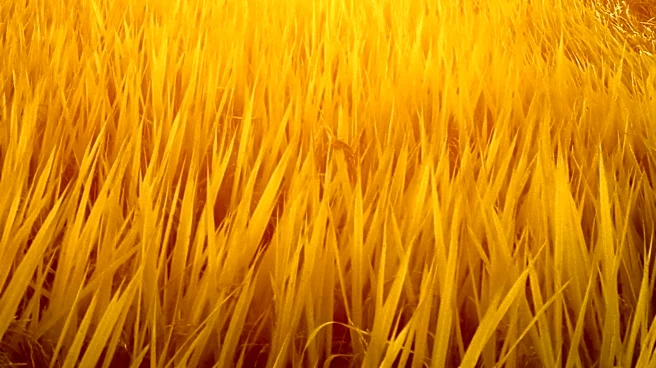
China's national autumn grain production has officially entered a crucial phase for yield formation. This period is vital for determining the final harvest size and quality of autumn grains across the country. The focus during this time is on ensuring
optimal conditions for crop development to maximize output. Agricultural authorities and farmers are likely implementing various measures, such as irrigation, pest control, and nutrient management, to support the crops through this sensitive stage. The successful navigation of this period is paramount for securing China's food supply and maintaining agricultural stability. The announcement emphasizes the national importance placed on this agricultural cycle.
Why It's Important?
While this news directly concerns China's agricultural sector, it holds significant importance for the U.S. due to the interconnectedness of global food markets. China is a major consumer and producer of agricultural commodities, and its domestic grain production directly impacts international prices and trade flows. A successful autumn grain harvest in China could stabilize global food prices, potentially benefiting U.S. consumers by keeping import costs down for certain goods. Conversely, any challenges or shortfalls in China's yield formation could lead to increased demand for imports, driving up global commodity prices and potentially affecting U.S. agricultural exports and domestic food costs. U.S. agricultural businesses and policymakers closely monitor such developments to anticipate market shifts and adjust trade strategies, as disruptions in one major agricultural economy can have far-reaching economic consequences.
What's Next?
In the coming weeks, agricultural reports from China will likely provide updates on the progress of the autumn grain yield formation. Experts will be watching for weather patterns, pest outbreaks, and the effectiveness of agricultural interventions. The outcome of this critical period will influence China's import needs for the upcoming year, which in turn will affect global grain markets. U.S. agricultural exporters will be particularly attentive to these developments, as they could signal opportunities or challenges for their sales to China. International organizations and food security analysts will also assess the situation to gauge potential impacts on global food supply and prices. The focus will remain on ensuring a robust harvest to meet domestic demand and contribute to global food stability.
Beyond the Headlines
Beyond the immediate economic implications, the emphasis on China's autumn grain production highlights broader themes of food security and agricultural resilience in a changing global climate. As climate change introduces more unpredictable weather patterns, the vulnerability of critical yield formation periods becomes more pronounced. This situation underscores the strategic importance of agricultural self-sufficiency for large nations and the potential for climate-related events to disrupt global food systems. For the U.S., this reinforces the need for robust agricultural research, diversified supply chains, and international cooperation on food security. It also brings to light the ethical considerations surrounding global food distribution and the potential for agricultural outcomes in one region to impact food access and affordability worldwide.