








What's Happening?
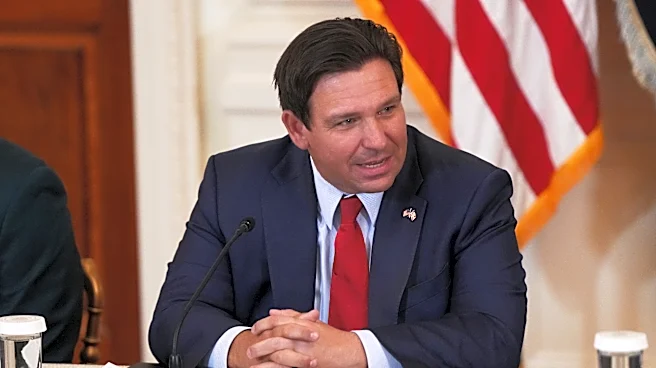
Governor Ron DeSantis of Florida has announced a proposal to phase out property taxes on homeowners' residences. The plan involves a November ballot referendum to increase the state's homestead exemption to $250,000. DeSantis made this announcement during
a press conference in Tampa Bay, emphasizing the need to alleviate financial burdens on residents. The proposal suggests that local governments could compensate for the loss in revenue by taxing wealthier property owners. A special session of the Florida Legislature has been called to discuss this proposal, which requires 60% approval from the legislature to be placed on the ballot. If approved, the measure would eliminate property taxes on homes valued at $250,000 or less, with a gradual increase in the exemption to $500,000 and eventually a full exemption for all homes. The proposal has received mixed reactions, with some lawmakers supporting the initiative as a means of providing relief to homeowners, while others express concerns about the impact on funding for public services.
Why It's Important?
The proposal to phase out property taxes in Florida could have significant implications for both homeowners and local governments. For homeowners, particularly those with properties valued at $250,000 or less, the elimination of property taxes could provide substantial financial relief. However, the reduction in property tax revenue could pose challenges for local governments, which rely on these funds to support essential services such as schools, police, and public parks. The plan suggests that wealthier property owners could be taxed to make up for the shortfall, but this approach may not be sufficient to cover all funding needs. The proposal also highlights a broader debate about tax policy and the balance between providing relief to residents and ensuring adequate funding for public services. The outcome of the special legislative session and the subsequent voter referendum will be crucial in determining the future of property tax policy in Florida.
What's Next?
The Florida Legislature is set to convene for a special session to discuss Governor DeSantis's proposal. The session will focus on the details of the plan and the potential impacts on state and local budgets. Lawmakers will need to consider how to balance the proposed tax relief with the need to maintain funding for public services. If the legislature approves the proposal, it will be placed on the November ballot for voter consideration. The outcome of the vote will determine whether the plan is implemented. In the meantime, stakeholders, including local government officials and advocacy groups, are likely to engage in discussions and campaigns to influence public opinion and legislative decisions. The proposal's progress will be closely watched by both supporters and opponents, as it could set a precedent for tax policy in other states.