





What's Happening?
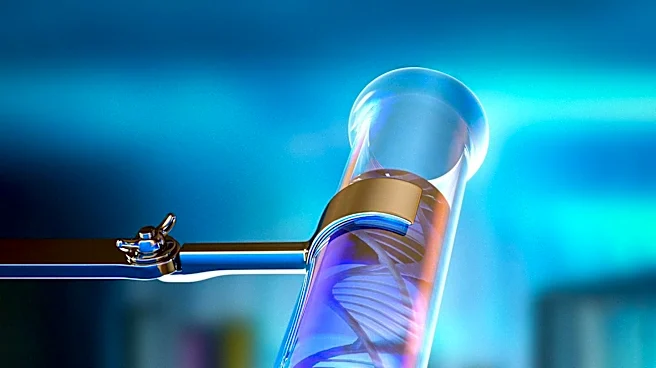
Recent advancements in genome editing technology are significantly improving the precision of genetic modifications across various fields, including medicine, agriculture, and cosmetics. Researchers are making strides in enhancing the accuracy of genome correction,
particularly in introducing defined DNA sequences at chosen genomic sites. Studies highlight that the design of donor molecules is crucial for biasing repair towards intended outcomes. For instance, single-stranded DNA donor repair templates used with CRISPR/Cas9 have shown high frequency of targeted insertion in potato protoplasts, while CRISPR-Cas12a combined with homology-directed repair has proven effective for targeted insertion in maize. In human cells, a circular donor DNA paired with a dedicated cleaver is being explored to improve the precision of genome correction. The field is also seeing the evolution of tools from zinc-finger nucleases and TALENs to CRISPR-Cas9, base, and prime editors, with applications in monogenic diseases like sickle cell anemia and Duchenne muscular dystrophy, as well as CAR-T engineering for cancer.
Why It's Important?
The continuous refinement of genome editing technologies holds immense importance for the U.S. in both healthcare and agriculture. In medicine, improved precision in genome correction can lead to more effective treatments for genetic diseases and cancer, potentially offering cures for conditions that were previously untreatable. The ability to accurately target and modify specific genes reduces off-target effects, enhancing the safety and efficacy of gene therapies. In agriculture, precise genome editing can lead to the development of crops with enhanced traits, such as increased yield, disease resistance, and nutritional value, contributing to food security and economic stability. The commercialization of these technologies, as seen with approvals like CASGEVY, signifies a new era in biotechnology, promising significant advancements but also raising critical questions about equitable access, long-term safety, and ethical considerations.
What's Next?
The future of genome editing involves continued research into optimizing donor architecture, nuclease choice, and understanding repair pathways in different biological systems. The toolkit is expected to expand further with technologies like prime editing, twin prime editing, and PASTE, which may overcome current limitations of nuclease-mediated homology-directed repair. Delivery platforms, from viral vectors to lipid nanoparticles, will also see further development to ensure safe, efficient, and tissue-specific delivery of editing machinery. Machine learning and multi-omics integration are anticipated to improve guide design and tailor editing strategies to individual genomes. While clinical data is encouraging, ongoing challenges include off-target activity, Cas immunogenicity, delivery efficiency, and cost. Sustained public discussion and credible regulation are essential to address the ethical, legal, and social dimensions, particularly concerning germline editing, as these technologies move towards broader clinical and commercial applications.
Beyond the Headlines
Beyond the immediate applications, the advancements in genome editing technology trigger profound ethical, legal, and societal discussions. The ability to precisely alter the human genome raises questions about 'designer babies' and the potential for exacerbating existing social inequalities if these therapies are not universally accessible. The long-term safety of these interventions, including unforeseen consequences of genetic modifications, remains a critical area of study. In agriculture, while promising increased yields and resilience, the introduction of genetically edited organisms into the environment requires careful consideration of ecological impacts. The rapid pace of innovation in this field necessitates a robust regulatory framework that can adapt to new discoveries while ensuring public safety and ethical conduct. The integration of machine learning and multi-omics data also points to a future where personalized medicine is not just about treating symptoms but proactively modifying genetic predispositions, blurring the lines between treatment and enhancement.