





What's Happening?
Congresswoman Ayanna Pressley, alongside Boston Mayor Michelle Wu and other state and city officials, announced over $16 million in combined state, city, and federal funding for the modernization of the Fairmount public housing community in Hyde Park.
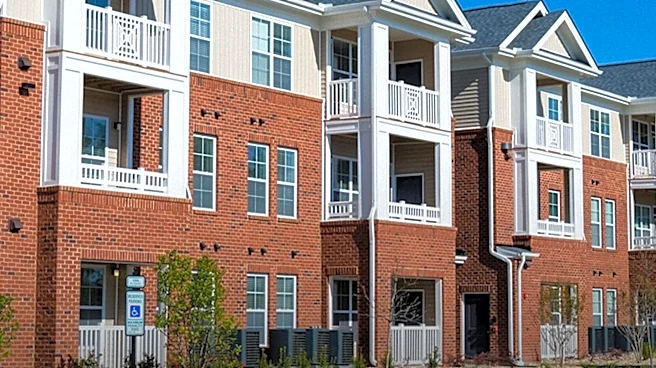
This investment aims to upgrade the 1951-built Fairmount Apartments, which comprise over 200 units of state public housing. The funding package includes a $10 million High Leverage Asset Preservation Program (HILAPP) grant from the Executive Office of Housing and Livable Communities (EOHLC), $5 million in capital funding from the City of Boston, and $1 million from the Community Project Fund, secured by Congresswoman Pressley and Senators Edward Markey and Elizabeth Warren. The initial phase of renovations will focus on modernizing unit interiors, making 5% of apartments fully accessible, electrifying heating and hot water systems, adding cooling, improving building envelopes, and installing green stormwater infrastructure to enhance sustainability and climate resilience. The Boston Public Health Commission has also contributed funds for open space improvements and community garden installations.
Why It's Important?
This significant investment underscores a commitment to addressing housing needs and improving living conditions for residents in public housing communities. The modernization efforts will directly impact the quality of life for families in the Fairmount Apartments by providing safer, more accessible, and environmentally sustainable homes. The focus on accessibility ensures that a portion of the units will meet modern standards for individuals with disabilities, promoting inclusivity. Electrifying heating and hot water systems and installing green stormwater infrastructure contribute to climate resilience and sustainability, aligning with broader environmental goals and potentially reducing long-term operational costs. Furthermore, the project includes workforce opportunities through Boston’s PowerCorps program, which will train local residents to build and maintain rain gardens, fostering green career credentials and economic empowerment within the community. This initiative reflects a collaborative approach between federal, state, and city governments to invest in existing affordable housing infrastructure.
What's Next?
The Boston Housing Authority (BHA) will initiate a Master Planning process for the Fairmount community to develop an area-wide vision for the complex. The initial phase of physical improvements, as outlined, will commence, focusing on unit upgrades, accessibility enhancements, and sustainable infrastructure. The project will also involve the implementation of flood mitigation measures for affordable housing developments, including BHA properties, through multi-site stormwater projects and the creation of community gardens and rain gardens. Local residents will be trained through Boston’s PowerCorps program to maintain these green infrastructures. This multi-phase renovation is expected to continue improving livability for residents for decades to come, with ongoing collaboration between city, state, and federal partners to ensure the successful execution of the modernization plans.
Beyond the Headlines
This investment in public housing extends beyond mere structural upgrades; it represents a broader commitment to housing justice and equity. Congresswoman Pressley has consistently advocated for policies that affirm housing as a human right, including reintroducing the Housing for Formerly Incarcerated Reentry and Stable Tenancy (Housing FIRST) Act to remove barriers to housing for formerly incarcerated individuals. The modernization of Fairmount Apartments, with its emphasis on accessibility and sustainability, reflects a holistic approach to community development that considers both immediate living conditions and long-term environmental and social well-being. By investing in existing public housing, the initiative aims to preserve affordable homes and strengthen neighborhoods, ensuring that families can continue to thrive in their communities. This project also highlights the importance of community input, as the investment is described as a reflection of residents' voices being heard and realized.