
What's Happening?
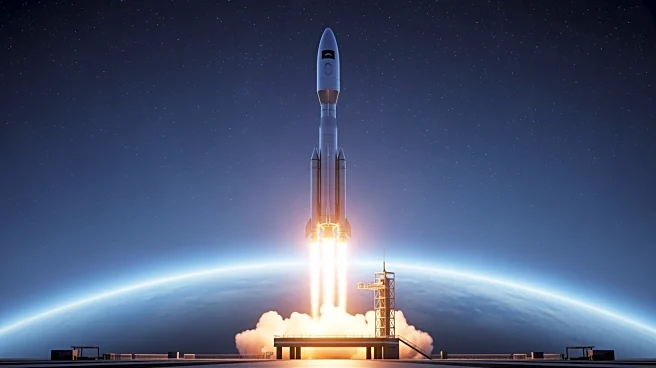
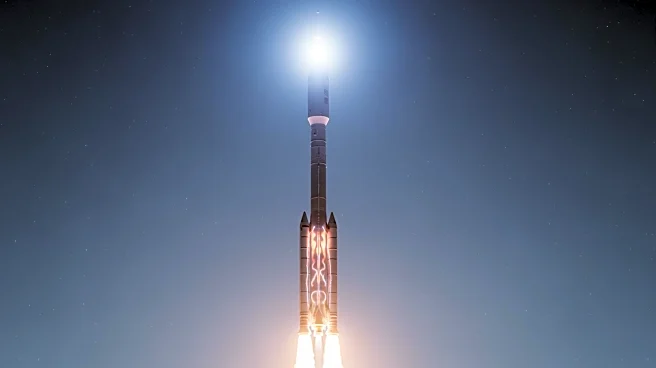
United Launch Alliance's Vulcan Centaur rocket successfully reached orbit on February 12, despite experiencing a significant performance anomaly during its ascent. One of the rocket's four solid rocket boosters
burned through its nozzle, causing a dramatic display as fragments detached mid-flight. This incident occurred during the fourth launch of the Vulcan Centaur, which is intended to replace the Atlas V and Delta IV rockets. Despite the anomaly, the mission was deemed a success as the US Space Force payload was delivered directly to geosynchronous orbit. This launch marks the second time an anomaly has been noted with the Vulcan Centaur's boosters, following a similar issue in 2024. United Launch Alliance plans to investigate the cause of the anomaly and implement corrective actions before the next mission.
Why It's Important?
The successful deployment of the US Space Force payload despite the booster anomaly underscores the resilience and reliability of the Vulcan Centaur rocket. This mission is crucial for United Launch Alliance as it seeks to establish the Vulcan Centaur as a reliable heavy-lift vehicle for future space missions. The rocket's ability to counteract the asymmetric thrust and complete its mission highlights the robustness of its design. The incident also emphasizes the importance of thorough investigations and corrective measures to ensure the safety and success of future launches. The Vulcan Centaur's performance is particularly significant as it competes with other heavy-lift vehicles in the commercial space industry, including those from SpaceX and Blue Origin.
What's Next?
United Launch Alliance will conduct a thorough investigation to determine the root cause of the booster anomaly and implement necessary corrective actions. The company plans to ramp up Vulcan Centaur operations in 2026, with future launches including payloads for Amazon Leo. However, it remains unclear if these plans will be delayed pending the investigation's outcome. The findings from this investigation will be critical in ensuring the reliability of future Vulcan Centaur missions and maintaining confidence among stakeholders, including the US Space Force and commercial clients.