


What's Happening?
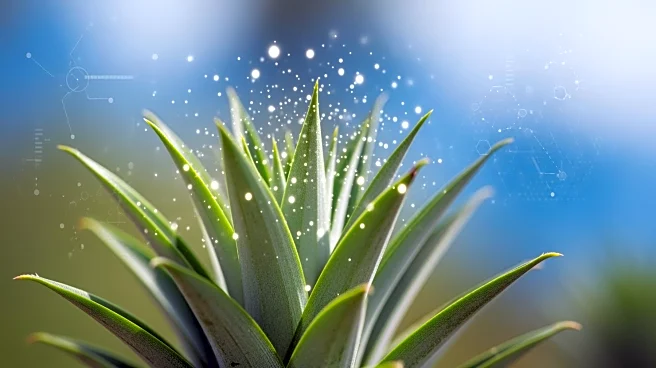
Researchers at Nelson Mandela University in South Africa have discovered a novel use for pineapple leaves, traditionally considered agricultural waste. These leaves can be transformed into carbon-based nanoparticles that effectively clean contaminated
water and assist in forensic investigations. The process involves converting the leaves into nanoparticles that can adsorb copper ions from wastewater. Once the copper is absorbed, the nanoparticles can be repurposed as a fine powder for dusting latent fingerprints, which are invisible prints left by sweat and skin oils. This innovative approach not only addresses water pollution but also provides a cost-effective solution for forensic science.
Why It's Important?
The development of pineapple leaf-based nanoparticles presents a significant advancement in environmental and forensic science. Copper pollution is a major issue in South Africa, particularly in regions affected by mining and industrial activities. The ability to remove copper from wastewater using a low-cost material derived from agricultural waste offers a sustainable and economical solution. Additionally, the repurposing of these nanoparticles for fingerprint detection provides a safer alternative to traditional powders, which often contain harmful chemicals. This discovery supports the principles of a circular economy by transforming waste into valuable resources, potentially reducing environmental pollution and treatment costs.
What's Next?
The researchers are optimistic about scaling up the technology for use in wastewater treatment facilities and forensic laboratories. Further testing is required to evaluate the long-term performance and stability of the nanoparticles in real-world conditions. Collaboration with universities, government bodies, and industry partners is essential to advance the technology. Support through funding, incentives, and regulation will be crucial for widespread adoption. If successful, pineapple leaves could transition from waste to valuable resources, contributing to environmental protection and public safety.
Beyond the Headlines
This innovation highlights the potential of agricultural waste in addressing environmental and societal challenges. By converting pineapple leaves into multifunctional products, the research underscores the importance of sustainable practices and the circular economy. The use of nanoparticles derived from waste not only reduces pollution but also enhances public safety through improved forensic methods. This approach could inspire similar initiatives, encouraging the transformation of other types of agricultural waste into valuable materials.