





What's Happening?
The Sorrento Fire, which ignited on Sunday afternoon in San Diego's Sorrento Valley, is now 25% contained. The vegetation fire, burning between Sorrento Valley Boulevard and Carmel Mountain Road, grew to 131 acres. While the fire initially threatened
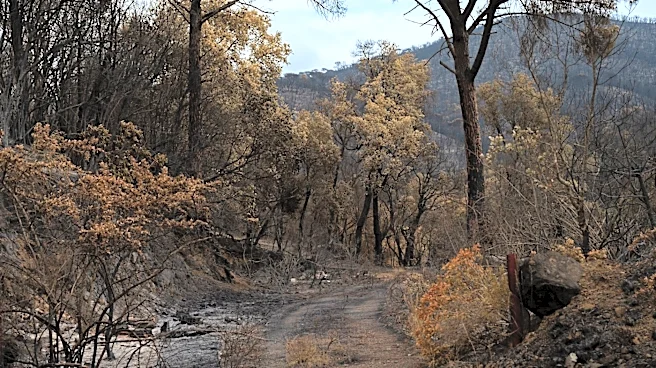
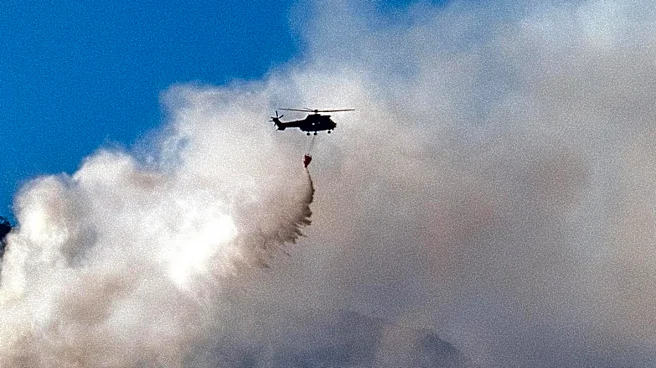
nearby structures, forward progress has been stopped. All evacuation warnings have been lifted, though a portion of Zone SDC-1444 (SDC-1444-A) remains under an evacuation order. Firefighters faced difficult access due to the fire burning along a hiking trail and through washouts from a previous fire. Aircraft played a crucial role in stopping the fire's forward spread within approximately an hour, with five fixed-wing aircraft and helicopters operating from Hemet and Ramona, utilizing a nearby golf course for water pickups. The cause of the fire is currently unknown.
Why It's Important?
The rapid containment of the Sorrento Valley Fire is a significant relief for residents and local authorities, preventing what could have been a much larger disaster. Wildfires, particularly in densely populated areas like San Diego, pose substantial threats to lives, property, and natural resources. The effective response, particularly the critical role of aerial support in difficult terrain, highlights the importance of well-equipped and coordinated firefighting efforts. The incident underscores the ongoing challenge of wildfire management in California, a state frequently impacted by such events. For local communities, the lifting of evacuation warnings means a return to normalcy, but the event serves as a reminder of the constant vigilance required and the need for robust emergency preparedness and response systems.
What's Next?
Firefighters will continue working overnight to fully contain the Sorrento Fire, focusing on slowing its progress, containing hot spots, and preventing it from jumping nearby roads. Investigations into the cause of the fire will commence to determine its origin and prevent future occurrences. Local authorities will monitor the remaining evacuation order for Zone SDC-1444-A and will lift it as soon as it is safe for residents to return. The incident may prompt discussions on fire prevention strategies in the Sorrento Valley area, including vegetation management and community preparedness. For residents, the focus will shift to recovery and assessing any potential impacts, while emergency services will review their response to identify areas for improvement in future wildfire incidents.
Beyond the Headlines
The Sorrento Valley Fire, while contained, highlights the broader environmental and urban planning challenges faced by regions prone to wildfires. The difficulty in accessing the fire due to terrain and previous washouts underscores the complex interplay between natural landscapes and human development. As urban areas expand into wildland-urban interfaces, the risk of such fires increases, necessitating innovative approaches to land management, infrastructure protection, and community education. This event also subtly points to the impact of climate patterns on fire seasons, even if not explicitly stated as the cause. The reliance on aerial resources and the quick turnaround for water pickups illustrate the technological advancements in firefighting, but also the immense resources required to combat these increasingly frequent and intense natural disasters.