



What's Happening?
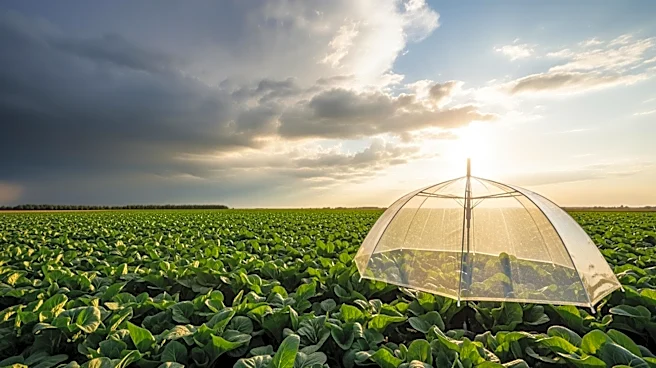
The Indian government has announced that it anticipates limited damage to agriculture from a potential El Nino weather pattern this year. This expectation is based on improved irrigation infrastructure, higher reservoir levels, and better-prepared farmers
compared to previous El Nino episodes. Agriculture Minister Shivraj Singh Chouhan chaired a meeting to prepare for the Kharif crop season, which begins with the southwest monsoon in June. The India Meteorological Department has forecast below-normal monsoon rainfall at around 92% of the long-period average, with a risk of El Nino conditions developing. Despite this, the government is confident that the impact on agriculture will be less severe than in past instances, thanks to current water reserves and secured seed stocks. The government has also implemented micro-irrigation networks, climate-resilient seed varieties, and early-warning systems to reduce vulnerability.
Why It's Important?
The potential impact of El Nino on agriculture is significant as India is a major producer of rice and wheat, with farm output directly affecting the livelihoods of millions. The government's proactive measures, such as improved irrigation and climate-resilient seeds, aim to mitigate the risks associated with El Nino, which historically disrupts monsoon patterns and can lead to droughts. By preparing contingency plans and promoting drought-tolerant crops, the government seeks to protect the agricultural sector and ensure food security. This approach not only safeguards farmers' incomes but also stabilizes the national economy, which is heavily reliant on agriculture.
What's Next?
The government will continue to monitor weather patterns and coordinate with state governments to implement contingency plans at the district level. Officials are promoting strategies such as delayed sowing and the use of drought-tolerant crop varieties. A crop-weather monitoring mechanism is in place to enable quick responses to any adverse conditions. The final monsoon forecast is expected in late May, which will provide further guidance on necessary actions. The government remains focused on maintaining agricultural stability and minimizing the impact of potential climate disruptions.