






What's Happening?
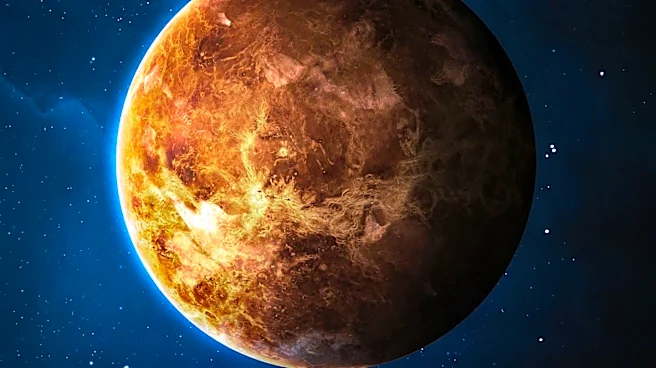
Venus is currently the most prominent planet visible in the evening sky, as Mercury and Jupiter have moved behind the sun and are no longer visible. Venus, known for its brightness, is gradually descending in the western sky and will pass close to the star
Regulus in early July. Meanwhile, Saturn is visible before dawn in the east-southeast, with its rings tilted towards Earth, making it a prime target for telescopic observation. Mars is also becoming more noticeable as it rises earlier each morning, providing an opportunity to spot the faint planet Uranus nearby on July 4. This celestial arrangement offers skywatchers a chance to observe these planets under favorable conditions throughout July.
Why It's Important?
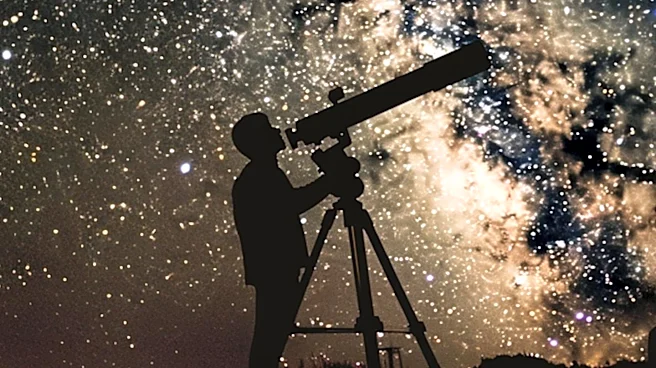
The visibility of Venus and other planets in the night sky provides an opportunity for both amateur and professional astronomers to engage in skywatching activities. This planetary lineup allows for educational and recreational observation, fostering interest in astronomy and science. The positioning of these planets can also aid in scientific studies and public outreach efforts by observatories and planetariums. Additionally, the visibility of these celestial bodies can inspire curiosity and wonder about the universe, encouraging people to learn more about space and our solar system.
What's Next?
As July progresses, Venus will continue to descend in the evening sky, eventually becoming less visible. Saturn will remain a highlight for early risers, with its rings providing a spectacular view through telescopes. Mars will continue to brighten and rise earlier, offering more opportunities to observe it alongside Uranus. These changes in planetary positions will keep skywatchers engaged, with potential for organized viewing events and educational programs. Observers should take advantage of clear nights to witness these celestial phenomena before the planets shift positions again.