
What's Happening?
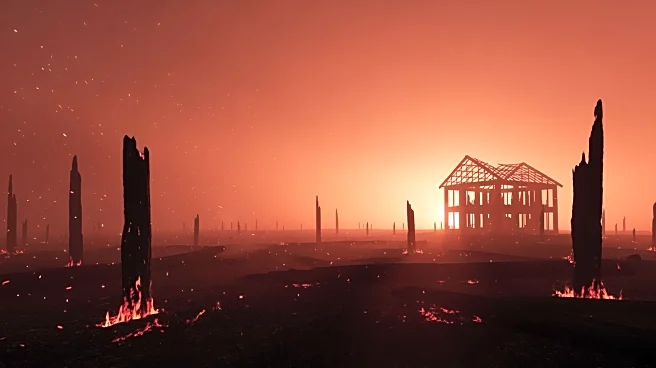
Severe bushfires in south-east Australia have resulted in the death of one person and the destruction of 300 homes and buildings. The fires, primarily affecting the state of Victoria, have been fueled
by extremely hot, dry, and windy conditions. A state of emergency has been declared as thousands of firefighters and over 70 aircraft work to control the blazes. The fires have burned through an area nearly twice the size of Greater London, with authorities warning that the situation could persist for weeks. The village of Gobur, near Longwood, has been particularly affected, with human remains discovered amidst the devastation. The fires are the worst to hit the region since the 2019-2020 bushfire season.
Why It's Important?
The ongoing bushfires in Australia highlight the increasing frequency and intensity of natural disasters, likely exacerbated by climate change. These events have significant implications for public safety, environmental health, and economic stability. The destruction of homes and infrastructure places a heavy burden on affected communities, requiring substantial resources for recovery and rebuilding. Additionally, the fires contribute to air quality deterioration, posing health risks to residents. The situation underscores the need for effective disaster management strategies and climate adaptation measures to mitigate future risks and protect vulnerable populations.