


What's Happening?
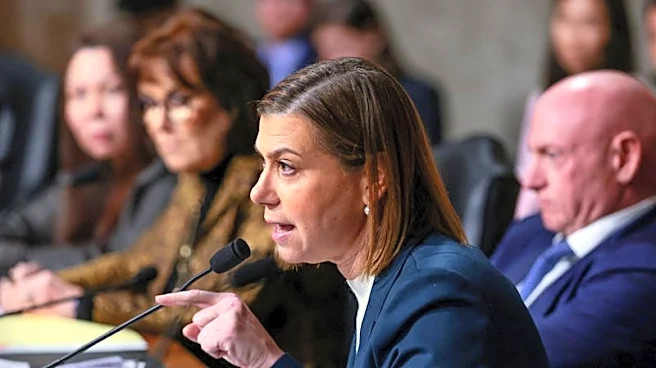
Democratic Senator Tammy Duckworth of Illinois is urging the Pentagon and the Federal Aviation Administration (FAA) to reject President Trump's proposal to convert a triumphal arch into a 'top grade Military Complex.' This complex, intended to be equipped
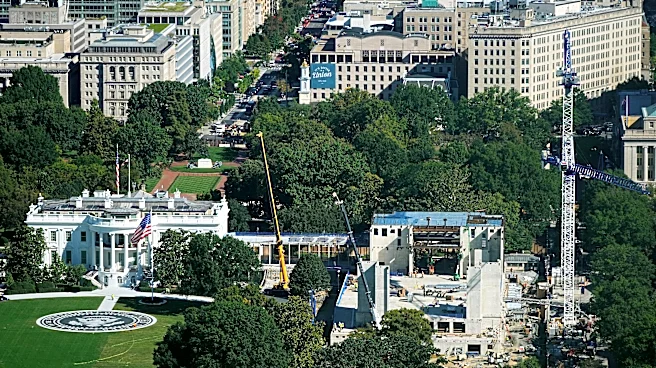
with snipers and capable of storing, launching, and landing drones, would be situated within the flight path of Washington's Ronald Reagan National Airport. Senator Duckworth, a former Army helicopter pilot, argues that this plan poses significant safety risks to the already congested airspace around the airport. She has sent a letter to Defense Secretary Pete Hegseth and FAA Administrator Bryan Bedford, criticizing the administration for focusing on this project while allegedly neglecting crucial safety recommendations from the National Transportation Safety Board (NTSB) following a midair collision in January 2025. The FAA had previously determined that the 250-foot arch, under construction near Arlington National Cemetery, poses no hazard to flights, but Duckworth questions if this assessment considered its use as a military complex.
Why It's Important?
This situation highlights a critical conflict between national security interests, as perceived by President Trump, and aviation safety concerns raised by Senator Duckworth and other officials. The proposed military complex, with its potential for snipers and drone operations in a busy flight path, could introduce unprecedented risks to civilian air travel. The debate also underscores broader issues regarding the allocation of federal resources and attention. Senator Duckworth's criticism suggests that the administration is prioritizing a 'vanity project' over implementing vital safety recommendations from the NTSB, which were issued after a fatal midair collision. This could erode public trust in aviation safety regulations and the government's commitment to preventing future accidents. Furthermore, the involvement of a prominent senator and former military pilot like Duckworth lends significant weight to the safety concerns, potentially forcing a more thorough review of the proposal.
What's Next?
Senator Duckworth has demanded answers by October 5th regarding the FAA's safety assessment, specifically whether the military complex aspect was considered, and which military entity requested the conversion of the arch. The Pentagon and FAA have so far declined to comment, referring inquiries to the White House. This suggests that the decision-making process is likely to involve high-level discussions within the administration. Depending on the responses, or lack thereof, Senator Duckworth and other lawmakers may pursue further legislative or oversight actions. Public and political pressure could mount on the FAA and the Department of Defense to provide transparent justifications for their decisions. The outcome will determine whether the proposed military complex proceeds, potentially setting a precedent for similar projects near civilian airfields, or if safety concerns will lead to its rejection or significant modification.
Beyond the Headlines
Beyond the immediate safety concerns, this controversy touches upon the delicate balance between military operations and civilian infrastructure, particularly in densely populated areas. The idea of a 'triumphal arch' being repurposed for military use, complete with snipers and drones, raises questions about the militarization of public spaces and the potential impact on civil liberties and public perception. It also highlights the ongoing tension between executive directives and the oversight responsibilities of Congress and regulatory bodies like the NTSB. The incident could also spark a broader discussion about the transparency and accountability of federal agencies in their safety assessments, especially when political directives are involved. The long-term implications could include stricter regulations for military installations near civilian airspaces or increased scrutiny of projects perceived as politically motivated rather than strategically essential.