





What's Happening?
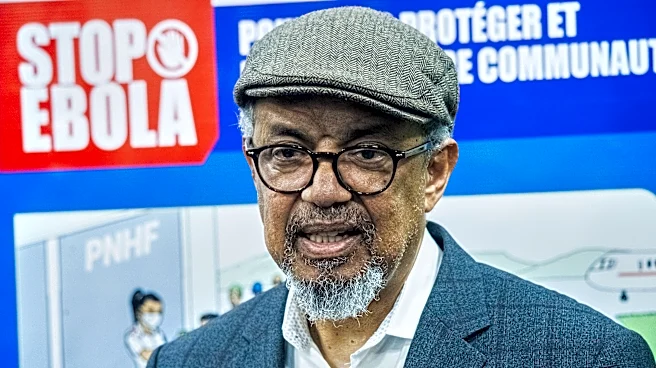
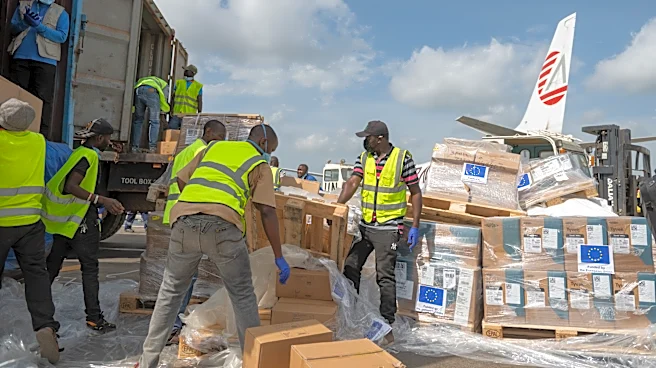
The Director-General of the World Health Organization (WHO), Tedros Adhanom Ghebreyesus, visited Bunia in eastern Congo, the epicenter of a rapidly spreading Ebola outbreak. Despite improved organization and new aid arrivals, the virus is outpacing response
efforts. The outbreak, caused by the Bundibugyo virus, has resulted in 906 suspected cases and 223 deaths. The U.S. has pledged an additional $80 million in aid, raising its total commitment to over $112 million. The outbreak has also affected neighboring Uganda, which has confirmed nine cases and one death. The WHO is urging countries to reconsider border closures and travel bans, which it argues discourage transparency.
Why It's Important?
The escalating Ebola outbreak in Congo poses significant public health challenges, with potential implications for international travel and trade. The U.S. financial commitment underscores the global nature of the response required to contain such outbreaks. The situation highlights the need for coordinated international efforts to manage infectious diseases, as well as the importance of transparency and cooperation among nations. The outbreak's rapid spread and the lack of approved treatments or vaccines for the Bundibugyo virus strain emphasize the urgency of developing effective medical interventions.
What's Next?
The WHO and international partners are likely to continue scaling up their response efforts, including deploying more medical personnel and supplies to affected areas. The U.S. and other countries may face pressure to increase their financial and logistical support. The situation could prompt discussions on improving global health security measures and preparedness for future outbreaks. Additionally, the WHO's call for reconsidering border closures may lead to diplomatic discussions on balancing public health measures with economic and social impacts.
Beyond the Headlines
The outbreak raises ethical and cultural challenges, particularly regarding the handling of victims' bodies, which has led to tensions with local communities. The situation also highlights the vulnerability of health workers, who face risks not only from the virus but also from attacks by residents and armed groups. The outbreak's impact on regional stability and security, given the involvement of rebel groups, adds another layer of complexity to the response efforts.