





What's Happening?
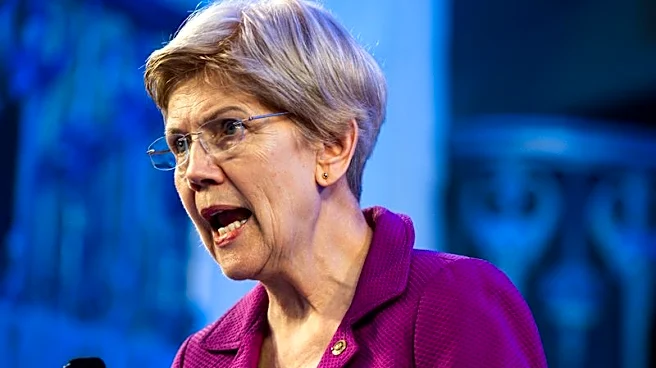
Democratic senators have criticized Social Security Commissioner Frank Bisignano for sending emails that they describe as partisan and promoting President Trump. The emails, sent to American seniors, praised President Trump's leadership and policies,
including the 'Big Beautiful Bill' which purportedly offered tax cuts and relief for seniors. Senators Elizabeth Warren, Ron Wyden, Tammy Baldwin, Sheldon Whitehouse, and Ben Ray Luján have expressed concerns that these communications conflict with Bisignano's commitment to run the Social Security Administration (SSA) independently and without political bias. The senators are seeking details about the distribution of a specific email sent on July 2, which they argue contained misleading statements about the benefits of the bill for seniors.
Why It's Important?
The controversy highlights the tension between maintaining the nonpartisan nature of federal agencies and the influence of political agendas. The SSA has traditionally been viewed as a nonpartisan entity, and the introduction of politically charged communications could undermine public trust. The emails in question have raised concerns about the potential politicization of Social Security communications, which are typically reserved for important administrative updates. This situation could impact how seniors perceive the SSA's role and its commitment to their financial interests, potentially affecting the agency's credibility and the public's confidence in its operations.
What's Next?
The group of Democratic senators has requested a response from Commissioner Bisignano by August 11, seeking clarification on the email's distribution and the parties involved in its creation. They have asked Bisignano to explain how the email aligns with his promise to lead the SSA in a nonpartisan manner. The outcome of this inquiry could influence future communications from the SSA and set a precedent for how federal agencies handle politically sensitive information. The SSA's response, or lack thereof, may also prompt further legislative or administrative actions to ensure the agency's communications remain unbiased.