



What's Happening?
A 15-point ceasefire proposal from the U.S. administration, aimed at halting Iran's nuclear development, has been criticized for neglecting maritime security in the Strait of Hormuz. The plan, which focuses on decommissioning nuclear facilities, fails
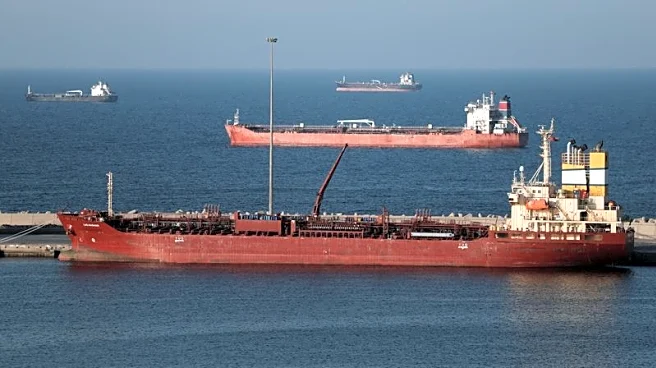
to address Iran's control over this vital shipping lane. Tehran has imposed transit fees on vessels, complicating international norms of free navigation. The Islamic Revolutionary Guard Corps (IRGC) has effectively become the gatekeeper of Middle Eastern shipping, impacting global trade and energy costs. The U.S. strategy has been described as siloed, focusing on nuclear issues while ignoring the chokehold on shipping lanes, which could legitimize IRGC's control.
Why It's Important?
The oversight in the U.S. plan has significant implications for global trade and energy security. The Strait of Hormuz is crucial for the transport of 20% of the world's seaborne oil. By not addressing Iran's control, the U.S. risks legitimizing the IRGC's influence, which could lead to increased energy costs and shipping disruptions. This situation affects not only the U.S. but also allies like Israel, where inflated energy prices and shipping costs are already impacting the economy. The reliance on Gulf Cooperation Council nations for maritime security is proving inadequate, necessitating a reassessment of regional security strategies.
What's Next?
To resolve the issue, the U.S. must shift from compartmentalized ceasefire talks to a robust Freedom of Navigation enforcement strategy. This involves dismantling the IRGC's infrastructure that enables maritime disruptions, such as naval command centers and missile batteries. A sustainable resolution requires ensuring free navigation in the Strait of Hormuz as a non-negotiable prerequisite for any diplomatic engagement. The U.S. and its allies must prioritize securing alternative trade corridors to mitigate the impact of Iran's control over shipping lanes.