



What's Happening?
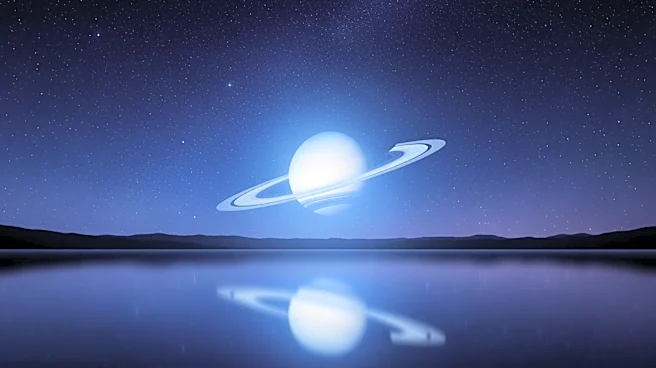
Saturn is becoming more visible in the night sky, rising earlier each day and visible less than an hour before sunrise by the end of April. This period also features several notable astronomical events, including Venus passing close to Uranus, and the Moon's
close approach to the star Regulus in Leo. Observers in certain parts of the U.S. can witness the Moon occulting Regulus, a rare event where the Moon passes in front of the star. Additionally, the comet Tempel 2 is brightening in the early morning sky, offering a spectacle for stargazers. These events provide opportunities for both amateur and professional astronomers to observe and study celestial phenomena.
Why It's Important?
The reappearance of Saturn and other celestial events offer valuable opportunities for astronomical observation and research. Such events can enhance public interest in astronomy and provide educational opportunities for students and enthusiasts. Observing these phenomena can also contribute to scientific research, as amateur astronomers often assist in data collection and analysis. The visibility of Saturn and other planets allows for the study of their atmospheres and other characteristics, contributing to our understanding of the solar system. These events also highlight the dynamic nature of the night sky and the importance of continued observation and exploration.