






What's Happening?
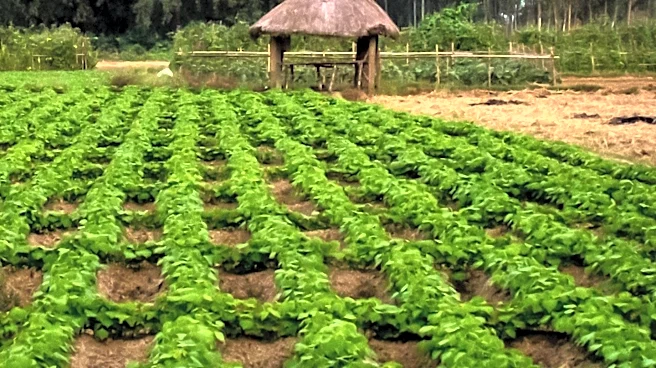
In Ogun State, Nigeria, a significant shift is occurring as northern youths abandon commercial motorcycle riding, known as 'okada', in favor of mechanized rice farming. This transition is taking place in Magboro, a community near the Lagos-Ogun border,
where former motorcyclists, factory workers, and traders are now engaging in agriculture. The initiative, which began as a small-scale effort by northern migrants, has grown into a large mechanized farming project. The project is supported by local leaders and has attracted interest from government officials. The farming initiative not only provides a more stable source of income for participants but also contributes to Nigeria's food security by increasing local rice production.
Why It's Important?
This development is crucial for several reasons. Firstly, it addresses youth unemployment by providing a sustainable livelihood alternative to the precarious and often dangerous job of commercial motorcycle riding. Secondly, it enhances food security in Nigeria, a country facing rising food prices and increasing rural-urban migration. By cultivating rice locally, the project reduces transportation costs and improves access to fresh produce. Additionally, the initiative challenges the perception that agriculture is only for the uneducated or impoverished, showing it as a viable business opportunity. The success of this project could serve as a model for other regions in Nigeria and beyond, promoting agriculture as a means to economic stability and growth.
What's Next?
The project is poised for further expansion, with calls for increased government support. Stakeholders are advocating for investments in infrastructure, irrigation, and modern farming equipment to enhance productivity. There is also potential for collaboration with other states and international partners to scale the initiative. As the project grows, it could significantly contribute to Nigeria's overall food production and help alleviate youth unemployment. The involvement of government and private sectors in providing affordable loans and technical support will be crucial in sustaining and expanding this agricultural revolution.