






What's Happening?
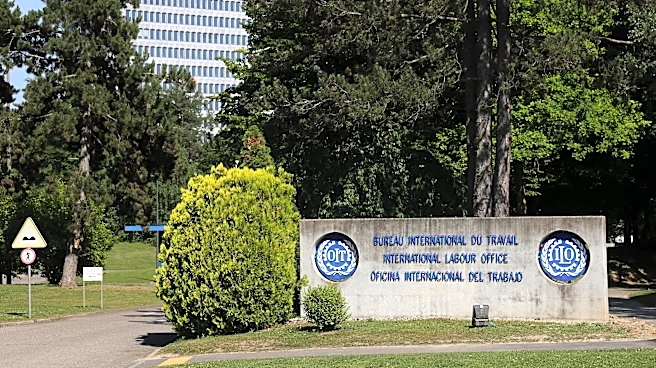
A new brief from the International Labour Organization (ILO) indicates that the ongoing Middle East crisis could significantly alter employment patterns across Asia and the Pacific. The crisis is prompting countries in the region to accelerate efforts
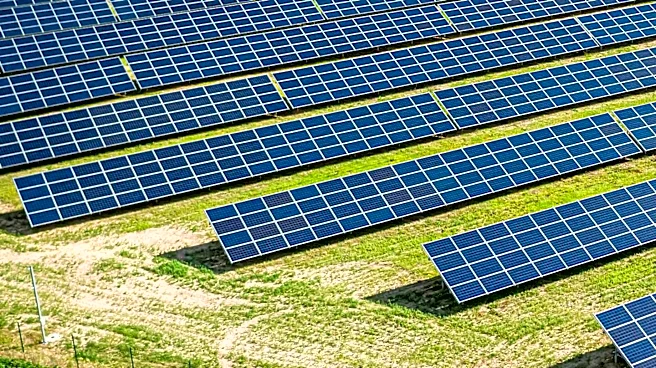
to reduce reliance on imported fossil fuels and enhance energy security. This shift is expected to drive increased investment in renewable energy, energy storage, and electrification, potentially creating substantial job opportunities. However, the ILO brief, titled 'The Middle East crisis, energy security and just transition in Asia-Pacific: Labour market implications,' cautions that these new employment gains may not directly benefit the same workers, sectors, or communities that face job losses and restructuring due to the energy transition. The report emphasizes the need for policy priorities that ensure a just transition, integrating employment and social considerations into energy-security and investment planning from the outset. It also highlights the importance of job quality, including adequate wages, safe working conditions, social protection, and workers' rights, especially given that nearly two-thirds of employment in the region remains informal.
Why It's Important?
This ILO brief underscores the profound economic and social implications of geopolitical events on global labor markets, particularly in the context of energy transitions. For the Asia-Pacific region, a rapid shift away from fossil fuels, while beneficial for long-term energy security and climate goals, presents significant challenges in managing labor market disruptions. The potential mismatch between job creation and job displacement means that without proactive policy interventions, certain segments of the workforce could be left behind, exacerbating existing inequalities. The emphasis on 'just transition' policies is critical to ensure that the benefits of a greener economy are broadly shared and that vulnerable workers and communities are supported through retraining, social protection, and targeted employment services. Failure to address these issues could lead to social unrest, increased poverty, and hinder the overall progress towards sustainable development in a region vital to the global economy.
What's Next?
The ILO brief identifies several policy priorities to ensure that the energy transition supports decent work and leaves no one behind. These include closer coordination between energy, industrial, employment, skills, and social protection policies to anticipate where jobs will be created, transformed, or lost. There will be an increased demand for occupations such as engineers, electricians, construction workers, installers, technicians, and operations and maintenance workers. Therefore, reskilling and upskilling initiatives, combined with employment services, job matching, and mobility support, will be crucial, with particular attention to women, young people, and informal workers. The brief also calls for targeted support for micro, small, and medium-sized enterprises and stronger regional cooperation. Furthermore, social dialogue between governments, employers' organizations, and workers' organizations will be essential to anticipate employment impacts, identify skills needs, and agree on support for affected workers and communities.
Beyond the Headlines
The ILO's analysis reveals a deeper interconnectedness between geopolitical stability, energy policy, and labor market dynamics. The Middle East crisis acts as a catalyst, accelerating pre-existing trends towards renewable energy but also exposing vulnerabilities in global supply chains and national economies. This situation highlights the urgent need for comprehensive national strategies that integrate economic development with social equity and environmental sustainability. The challenge extends beyond simply creating 'green jobs' to ensuring these jobs are accessible, provide decent working conditions, and are part of a broader framework that protects workers during economic restructuring. The informal sector, which constitutes a large portion of employment in Asia-Pacific, presents a particular challenge, as these workers often lack social protections and access to training, making them highly vulnerable during transitions. Addressing these systemic issues will require innovative policy solutions and robust international cooperation.