



What's Happening?
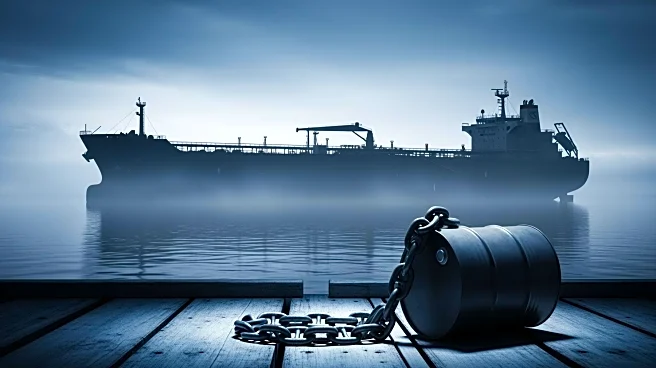
The United States has seized a Russian-flagged oil tanker, previously known as Bella-1 and now named Marinera, in the North Atlantic. This action was taken due to violations of U.S. sanctions on Venezuelan oil exports. The vessel was seized pursuant to a warrant
issued by a U.S. federal court, following its reflagging to Russia. The U.S. European Command announced the seizure, highlighting the vessel's involvement in transporting sanctioned crude oil from Venezuela. The Marinera is part of Russia's 'dark' fleet, a group of vessels reflagged to obscure their origins and activities. This incident underscores ongoing tensions between the U.S. and Russia, particularly in the context of U.S. efforts to enforce sanctions against Venezuela.
Why It's Important?
The seizure of the Marinera highlights the U.S.'s commitment to enforcing sanctions against Venezuela, a key aspect of its foreign policy aimed at pressuring the Venezuelan government. This action could further strain U.S.-Russia relations, as it involves a Russian-flagged vessel. The incident also raises questions about maritime law and the legal basis for such enforcement actions on the high seas. The reflagging of vessels to evade sanctions is a significant concern for international trade and security, as it complicates efforts to monitor and regulate global shipping activities. This development could impact global oil markets, particularly if it leads to increased scrutiny and enforcement actions against other vessels involved in similar activities.
What's Next?
The seizure may prompt diplomatic discussions between the U.S. and Russia, as well as potential legal challenges regarding the enforcement of sanctions on the high seas. The U.S. may continue to monitor and target other vessels suspected of violating sanctions, potentially leading to further seizures. This could escalate tensions not only with Russia but also with other countries involved in similar activities. The international community may need to address the issue of reflagging and its implications for maritime law and global trade. Additionally, the incident could influence future U.S. policy decisions regarding sanctions and their enforcement.