





What's Happening?
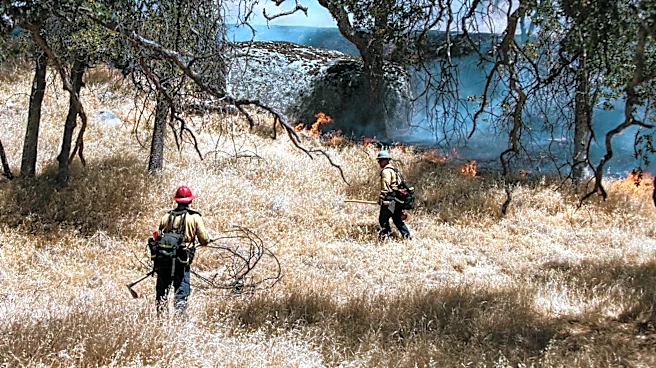
The President Trump administration has reshaped the approach to U.S. wildfire management by consolidating Interior Department agencies' firefighting crews into a new U.S. Wildland Fire Service. This new agency, along with the U.S. Forest Service, is pursuing
a 'full suppression' strategy for every new blaze. This aggressive approach is defended by administration officials, including U.S. Forest Service Chief Tom Schultz and U.S. Wildland Fire Service Director Brian Fennessy, as essential for protecting firefighters and communities during a hazardous summer in the abnormally hot and dry Western states. However, critics argue that this strategy could exacerbate the long-standing problem of dry fuels in Western forests, which has resulted from decades of extinguishing wildfires and climate change-induced drought. The reorganization has also raised concerns about communication and decision-making authority, particularly after the deaths of four federal firefighters in Colorado and Utah this year. While federal officials dispute any connection between the reorganization and these fatalities, investigations are ongoing.
Why It's Important?
The shift to a 'full suppression' wildfire strategy by the President Trump administration carries significant implications for U.S. land management, public safety, and resource allocation. Critics, including former agency leaders and experts, fear that this approach, reminiscent of the discredited 1930s-era '10 a.m. rule,' will prevent the use of prescribed fires for forest health, potentially leading to more catastrophic blazes in the future. This could leave Western forests more vulnerable and demand more firefighting resources than the government currently possesses. The consolidation of agencies and the new decision-making structure also raise concerns about the critical communication link between land management and fire management, potentially hindering effective responses to complex fire situations. States like California, which has invested heavily in its own firefighting capabilities, are particularly concerned about the federal changes, staff cuts, and the potential impact on wildfire readiness and public safety, especially given the significant economic and human costs of recent wildfires.
What's Next?
The U.S. Department of Agriculture's 2027 budget proposes transferring the Forest Service's wildland firefighting resources and responsibilities into the new Wildland Fire Service. A $1.16 million contract has been awarded to study consolidating all federal wildland fire operations into this new agency, with a report expected by February 15, 2027. This means the results will not be available for the fiscal 2027 budgeting process, which begins in September. Investigations into the deaths of the four federal firefighters are ongoing, and their findings could influence future policy and public perception of the new strategy. Stakeholders, including state officials, environmental advocates, and former firefighters, will continue to monitor the effectiveness and consequences of the 'full suppression' approach, particularly as the fire season progresses and resource scarcity remains a critical issue. The Forest Service is also undergoing its own reform, with headquarters moving to Salt Lake City and regional centers closing, which could further impact its operational capacity.
Beyond the Headlines
The President Trump administration's wildfire management overhaul highlights a deeper philosophical debate within U.S. land management: whether to prioritize immediate fire suppression or to embrace more holistic, long-term strategies that incorporate natural fire cycles for ecosystem health. The 'full suppression' policy, while seemingly aimed at protecting lives and property, risks perpetuating a cycle where forests become increasingly dense with dry fuels, leading to more intense and uncontrollable fires. This approach also underscores the tension between federal and state authorities in managing shared natural resources, particularly in states like California that have developed robust independent firefighting capabilities. The ethical implications of separating fire management from land management, as raised by critics, could lead to decisions that prioritize immediate containment over ecological sustainability, potentially impacting biodiversity and the long-term resilience of Western landscapes. The ongoing staff reductions and reorganization within the Forest Service also point to a potential loss of institutional knowledge and capacity, which could have profound and lasting effects on the nation's ability to effectively manage its wildlands.