







What's Happening?
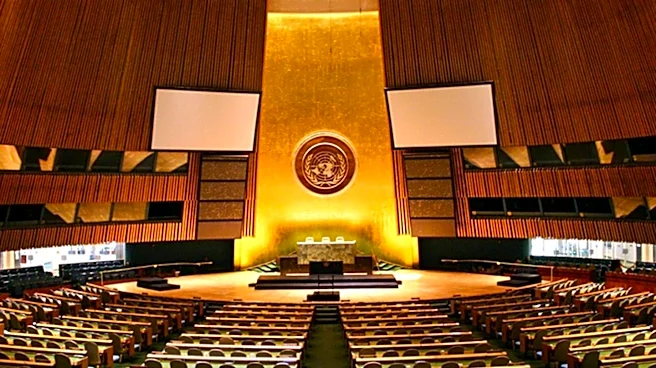
The United Nations has established a Borrowers Platform, a new initiative aimed at helping developing countries manage their increasing debt burdens. This platform, coordinated by the UN, emerged from the Fourth Financing for Development (FfD4) Conference
in Seville, Spain, in 2025, with agreement from 190 countries. Its launch comes at a time of significant global economic strain, where high debt levels are diverting public funds from essential services and infrastructure. Many developing nations are experiencing alarmingly high external debt, with 54 countries spending more on debt servicing than on health or education. The platform is designed as a permanent, member state-led space for knowledge sharing, navigating debt renegotiations, improving data transparency, and leveraging collective technical expertise. It seeks to strengthen the collective voice of developing countries in their engagements with creditor groups like the Paris Club. The platform emphasizes that it is not a crisis coordination mechanism or a forum for collective debt renegotiation, but rather a tool to build capacity and reduce default risks.
Why It's Important?
The establishment of the Borrowers Platform is significant because it addresses a critical vulnerability in the global financial architecture: the lack of a centralized legal framework for sovereign debt. This absence often leads to fragmented negotiations, unpredictable litigation, and isolated disputes, particularly as many countries defaulting are doing so for the first time and lack experience with complex restructuring processes. By providing a forum for developing countries to share experiences and expertise, the platform aims to improve their negotiating positions and reduce the likelihood of future defaults. Stronger debt management and resolution capabilities can send positive signals to creditors and credit rating agencies, potentially lowering the cost of capital for these nations over time. This initiative could foster greater stability in the global economy by mitigating the ripple effects of sovereign debt crises, which often impact international trade, investment, and financial markets.
What's Next?
The Borrowers Platform is expected to begin its operational phase, with South Africa offering to convene its inaugural meeting in 2026. Member states will likely focus on developing concrete strategies for knowledge exchange and technical assistance. The platform's effectiveness will depend on the active participation of developing countries and their ability to leverage its resources to improve debt management practices. It will also need to establish clear mechanisms for engagement with creditor groups to ensure its collective voice is heard and considered in debt restructuring discussions. The platform's success could lead to a more equitable and transparent global debt architecture, potentially influencing future international financial policies and frameworks. Continued efforts will be needed to ensure that the platform remains focused on its stated goals of capacity building and risk reduction, rather than becoming a forum for direct confrontation with creditors.
Beyond the Headlines
Beyond its immediate goals, the Borrowers Platform highlights a broader shift towards greater agency for developing nations in global financial governance. For years, creditor nations and institutions have largely dictated the terms of sovereign debt restructuring. This platform represents a collective effort by debtor nations to assert their interests and build a more balanced dialogue. It underscores the ethical dimension of global debt, where the financial burdens on developing countries often translate into reduced spending on essential public services like healthcare and education, impacting human development. The platform's emphasis on transparency and shared expertise could also foster a more collaborative approach to global financial stability, moving away from ad-hoc, crisis-driven interventions towards more proactive and preventative measures. This initiative could set a precedent for other areas of international cooperation where collective action by less powerful states can challenge established power dynamics.