



What's Happening?
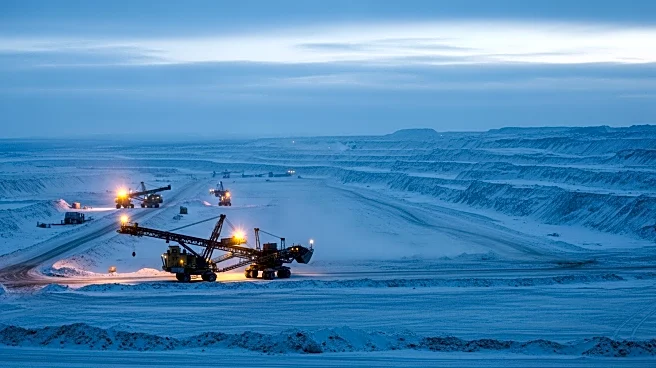
Rio Tinto has completed its final production of ore from the Diavik diamond mine located in the Northwest Territories of Canada. This marks the end of a 23-year operation that has been a significant economic contributor to the region. The mine, situated
less than 150 miles south of the Arctic Circle, has produced over 150 million carats of rough diamonds. Diavik has been a collaborative effort between Rio Tinto and Indigenous partners, providing socioeconomic benefits to the North. Closure activities are expected to continue until 2029, followed by post-closure monitoring. The final diamonds will be polished and sold through Rio Tinto's international network. Diavik was discovered in 1991 and began operations in 2003, utilizing both open pit and underground mining methods.
Why It's Important?
The closure of the Diavik diamond mine is significant for the Northwest Territories' economy, as it has been a major contributor to the region's GDP and employment. The mine supported over 1,100 jobs annually and contributed nearly 10% of the territorial GDP. Its closure will necessitate economic adjustments and potential shifts in employment for the local workforce. The mine's investment of approximately $11.75 billion, including $8 billion in the North, has fostered Indigenous partnerships and local businesses. The end of operations at Diavik may lead to increased focus on the remaining active diamond mines in Canada, Ekati and Gahcho Kué, and could influence future mining projects and economic strategies in the region.
What's Next?
Closure activities at Diavik will extend to 2029, with post-closure monitoring to ensure environmental and safety standards are met. Rio Tinto plans to reclaim the land in partnership with the Government of the Northwest Territories and Indigenous partners. The transition of the A21 pipe to underground mining extended Diavik's life into early 2026, but planning for closure began before production started. The site buildings are designed for safe demolition, and embankments will be breached to allow lake water to flow back into the mines. The closure process will focus on safety, land use, biodiversity, and community capacity.
Beyond the Headlines
The closure of Diavik highlights the challenges and achievements of mining in remote and environmentally sensitive areas. The mine's success story reflects the vision and determination required to overcome significant challenges, such as mining beneath a frozen lake. The collaboration with Indigenous partners underscores the importance of inclusive and sustainable development practices. As the mine's influence extends globally, it serves as a model for future mining projects in terms of environmental stewardship and community engagement.