



What's Happening?
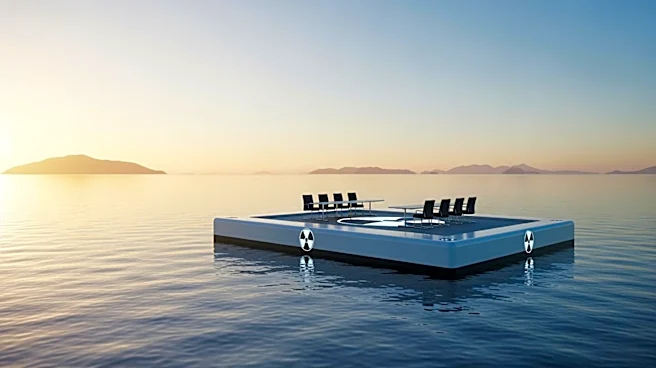
A recent study by the Deon Policy Institute, ABS, Core Power, and Athlos Energy suggests that Greek islands could benefit from floating nuclear power plants (FNPPs) by 2035. These miniature nuclear power plants, built on barges, could replace diesel-fired
generating stations on non-interconnected islands like those in the Cyclades and Dodecanese. The study indicates that FNPPs could provide a reliable and clean energy source, reducing dependence on imported fuels. The technology is considered mature, with no significant technical hurdles remaining. However, regulatory frameworks need strengthening, and public acceptance must be secured for successful implementation.
Why It's Important?
The introduction of floating nuclear power could significantly impact Greece's energy landscape, particularly for its islands that currently rely on diesel power. This shift could enhance energy security, reduce carbon emissions, and align with Greece's renewable energy goals. The successful deployment of FNPPs could also serve as a model for other coastal regions facing similar energy challenges. The study emphasizes the need for political momentum to translate into long-term institutional commitment and regulatory preparedness, which are crucial for integrating nuclear power into national energy plans.
What's Next?
For FNPPs to become a reality in Greece, immediate steps include integrating nuclear power into national energy strategies and building public support. The study highlights the importance of political and regulatory readiness to facilitate this transition. The upcoming Posidonia conference in Athens may provide a platform for further discussions on the integration of FNPPs into Greece's energy framework. Stakeholders will need to address public concerns and ensure that regulatory measures are in place to support the safe and efficient operation of these plants.