





What's Happening?
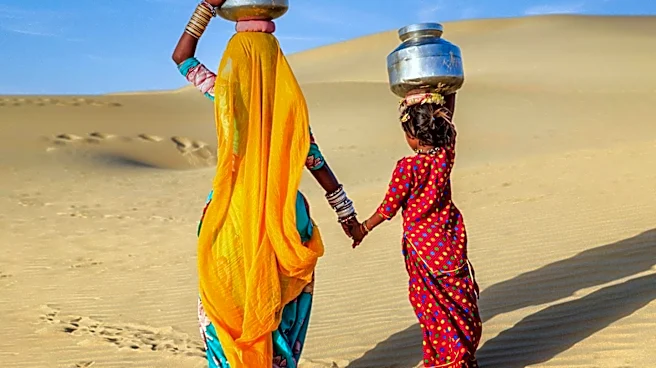
Action Against Hunger (ACF), in partnership with Oxfam and funded by the Government of Canada, is supporting women in climate-affected regions to build sustainable livelihoods and address food insecurity. One notable example is Salma Jaafar Mohammed,
a 50-year-old woman from a small village, who transformed her pastry business with ACF's assistance. Facing water scarcity and climate change challenges that rendered her husband unemployed, Salma became the primary provider for her family. Through the 'Feminist Solutions to Climate Change-Driven Food Insecurity' project, she received financial aid of approximately 2,100 CAD, new tools, equipment, and a two-day training course on business skills, marketing, and accounting. This support enabled her to expand her business, create a logo, offer free delivery, and secure contracts with local schools, ultimately employing others and aspiring to move her business to a town market. Her story highlights the critical role of women-led businesses in household survival, especially when traditional agricultural activities are no longer viable due to environmental factors.
Why It's Important?
This initiative is important because it directly addresses the intersection of climate change, gender inequality, and food insecurity, which are significant global challenges. By empowering women like Salma, Action Against Hunger is not only providing immediate relief but also fostering long-term economic resilience within vulnerable communities. The project demonstrates a successful model for how targeted support and skill development can enable individuals to overcome severe economic hardships caused by environmental degradation. The focus on women-led enterprises is particularly crucial as women often bear the brunt of climate change impacts and play a vital role in household food security. This approach can serve as a blueprint for other regions facing similar challenges, showcasing how investment in local entrepreneurship can lead to sustainable development and improved living standards, reducing reliance on external aid and strengthening community self-sufficiency.
What's Next?
The success of programs like Salma's suggests a potential for replication and scaling in other regions affected by climate change and food insecurity. Action Against Hunger and its partners will likely continue to advocate for and implement similar projects that empower women and build resilient food systems. The organization emphasizes the need for systemic transformation to end hunger, indicating a continued focus on addressing root causes rather than just symptoms. This includes advocating for policies that support women's economic empowerment and climate adaptation strategies. Future efforts may involve expanding training programs, increasing financial assistance, and fostering broader market access for women entrepreneurs. The long-term goal is to create a world free from hunger by strengthening local economies and enabling communities to withstand environmental and economic shocks, potentially influencing international development strategies and funding priorities.
Beyond the Headlines
The story of Salma Jaafar Mohammed goes beyond a simple business success; it underscores the profound impact of climate change on individual lives and the innovative solutions emerging from grassroots efforts. It highlights the ethical imperative to support vulnerable populations who are disproportionately affected by environmental crises they did not cause. The project's 'feminist solutions' approach recognizes that empowering women is not just about gender equality, but also about effective climate adaptation and poverty reduction. This model challenges traditional aid paradigms by investing in human capital and local agency, demonstrating that sustainable change comes from within communities. It also brings to light the often-overlooked resilience and entrepreneurial spirit of individuals in challenging circumstances, offering a powerful narrative of hope and self-determination in the face of global crises. The initiative implicitly calls for a re-evaluation of how international aid is structured, advocating for more localized, gender-sensitive, and climate-responsive interventions.