





What's Happening?
Social media platforms are increasingly recognized for their significant, multifaceted impact on individuals and society. While they serve as crucial tools for information dissemination, education, digital marketing, and connecting people, their influence
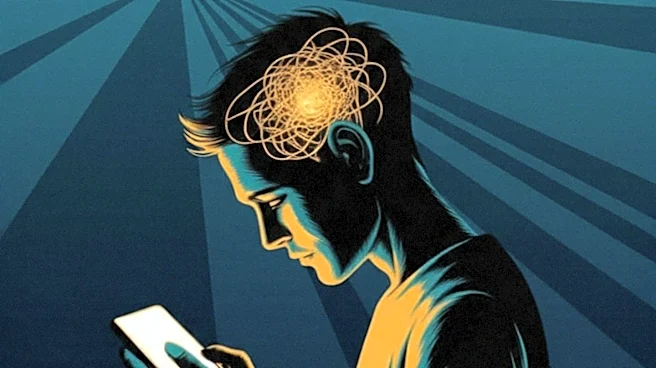
is highly dependent on user engagement. On the positive side, social media can help overcome isolation, alleviate boredom, and boost career aspects through content creation and marketing. Research by Koustuv Saha, an assistant professor of computer science at the University of Illinois, indicates that social media can positively affect mental health. For instance, during campus crises, university personnel posting counseling recommendations on platforms like Reddit helped reduce suicidal thoughts among students. Saha's research also surprisingly found that individuals who shared negative life events, such as job loss, on social media tended to heal more readily and experienced improved sleep quality and overall well-being compared to those who did not share. However, social media also presents challenges, including online harassment and stalking. The Washington State Department of Social and Health Services, for example, uses its social media accounts as limited public forums for community engagement, operating under specific guidelines for comments to manage these interactions.
Why It's Important?
The dual nature of social media's impact is critical for understanding contemporary U.S. society, affecting public discourse, mental health, and economic activities. Its role in information dissemination means it can rapidly spread vital public health information or educational content, but also misinformation. For businesses, social media is indispensable for branding and growth, particularly for small enterprises, by providing platforms for marketing and showcasing skills. The mental health implications are profound; while it can foster support and connection, mitigating feelings of isolation, it also poses risks like cyberbullying and privacy concerns. The findings from Professor Saha's research highlight a less-explored positive dimension, suggesting that controlled sharing of personal struggles can be therapeutic. This understanding is crucial for developing healthier online environments and for mental health professionals to potentially integrate social media into support strategies. The guidelines set by entities like the Washington State Department of Social and Health Services underscore the necessity of managing public forums to balance free expression with user safety and decorum, reflecting broader societal efforts to regulate online interactions.
What's Next?
Moving forward, there will likely be continued efforts to harness the positive aspects of social media while mitigating its negative consequences. Researchers like Professor Saha aim to collaborate with social media companies to integrate design interventions that prioritize user well-being. This could lead to platforms incorporating features that encourage supportive interactions and provide resources for mental health, potentially through AI-driven content moderation and recommendation systems focused on positive engagement. Regulatory bodies and government agencies, such as the Washington State Department of Social and Health Services, will likely continue to refine their social media policies to ensure safe and productive online communication. There may also be an increased focus on digital literacy education to empower users to navigate social media responsibly, maximizing its benefits for connection and information while minimizing exposure to harmful content and interactions. The ongoing evolution of AI will play a significant role in shaping these developments, offering both opportunities for enhanced user experience and challenges in content moderation and ethical use.
Beyond the Headlines
The deeper implications of social media extend to fundamental shifts in human communication, community formation, and the very fabric of public debate. The ability of individuals to share personal experiences and seek support online, as highlighted by Saha's research, points to a redefinition of social support networks, moving beyond traditional geographical or familial boundaries. This creates new forms of solidarity and collective healing, but also raises questions about the authenticity and sustainability of these digital bonds. Ethically, the responsibility of social media companies to protect user well-being, especially concerning mental health, will become an increasingly central debate. This includes discussions around data privacy, algorithmic transparency, and the potential for platforms to manipulate user emotions. Culturally, social media is reshaping how individuals perceive themselves and others, influencing identity formation and societal norms. The balance between free speech and the prevention of online harm will continue to be a complex legal and ethical challenge, impacting policy-making and the future design of digital public spaces.