



What's Happening?
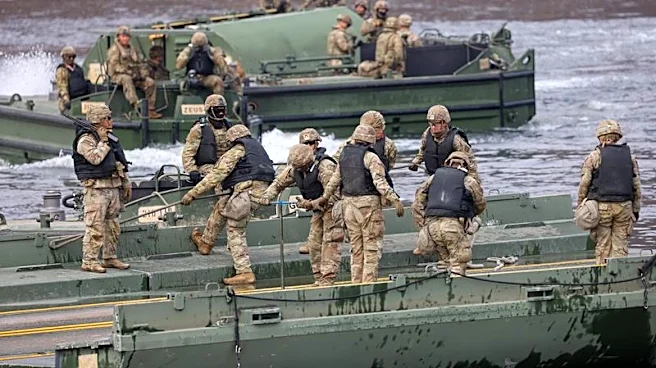
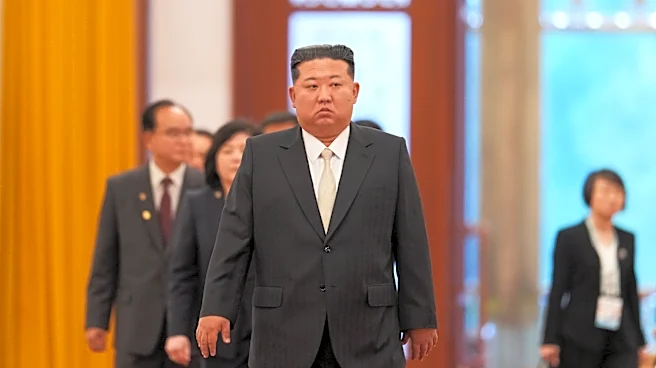
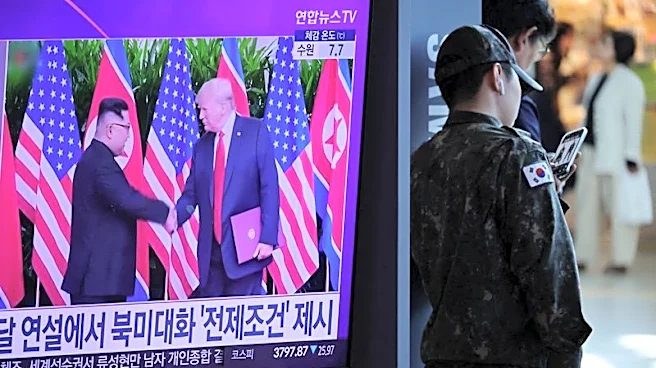
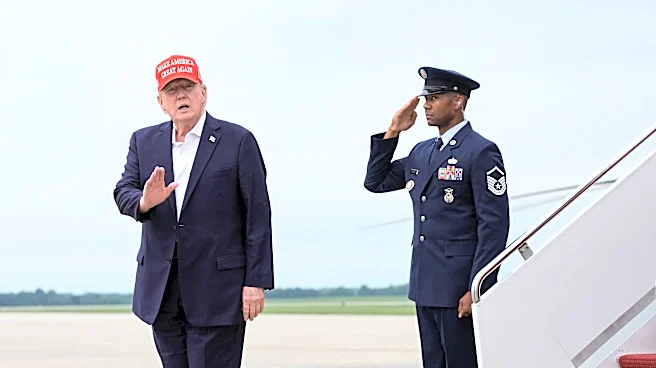
President Trump has declared that the United States will significantly decrease its joint military exercises with South Korea. This decision is attributed to his "very good relationship" with North Korea's leader, Kim Jong Un. The announcement follows
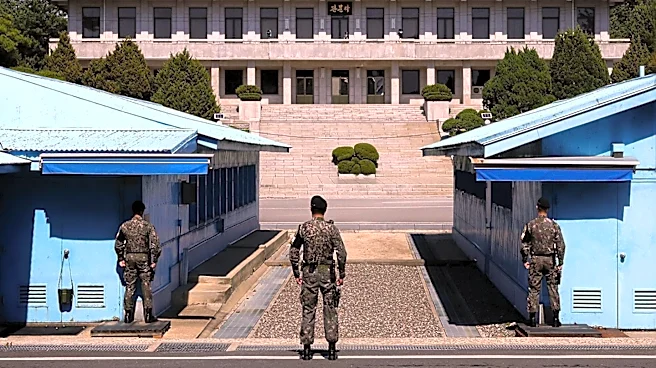
President Trump's expressed dissatisfaction with Seoul's refusal to join the U.S. in the "denuclearisation" of Iran. The BBC's Tom Bateman has provided an explanation of President Trump's evolving diplomatic approach towards both North and South Korea. This move signals a notable shift in U.S. foreign policy regarding military cooperation in the region, potentially altering the long-standing security arrangements between the U.S. and South Korea. The reduction in exercises could be interpreted as a gesture of goodwill towards North Korea, aiming to foster further dialogue and de-escalation on the Korean Peninsula. The context of Iran's denuclearization adds another layer of complexity, suggesting a broader strategic realignment in U.S. international relations.
Why It's Important?
This decision carries significant implications for regional security and U.S. alliances. The reduction of joint military exercises could be seen as a concession to North Korea, potentially impacting the readiness and interoperability of U.S. and South Korean forces. For South Korea, this might raise concerns about its defense posture and the reliability of U.S. security commitments, especially given the ongoing threat from North Korea. The move also highlights President Trump's preference for personal diplomacy over traditional military deterrence in certain contexts. Furthermore, linking the reduction of exercises to South Korea's stance on Iran's denuclearization suggests a transactional approach to alliances, where military cooperation can be influenced by unrelated foreign policy disagreements. This could set a precedent for how the U.S. engages with other allies on various international issues, potentially leading to a re-evaluation of alliance structures and commitments globally. The shift could also empower North Korea by reducing perceived military pressure, which might influence its future actions and negotiations.
What's Next?
The immediate next steps will likely involve detailed discussions between U.S. and South Korean defense officials to determine the scope and nature of the reduced military exercises. South Korea will need to assess the implications for its national security and potentially adjust its defense strategies. North Korea's reaction will be closely watched, as this move could either encourage further diplomatic engagement or be perceived as a sign of weakness, potentially leading to new demands. International observers will also be keen to see if this shift leads to any tangible progress in denuclearization talks with North Korea or if it merely alters the dynamics without achieving significant breakthroughs. The U.S. administration will likely articulate its rationale for this decision more fully, attempting to reassure allies while maintaining its diplomatic outreach to North Korea. The long-term impact on the U.S.-South Korea alliance and the broader geopolitical landscape of East Asia remains to be seen, with potential for both positive and negative outcomes depending on subsequent developments.
Beyond the Headlines
Beyond the immediate military and diplomatic implications, this decision reflects a broader philosophical shift in U.S. foreign policy under President Trump, emphasizing direct leader-to-leader engagement and a willingness to challenge established alliance norms. The linking of military exercises with South Korea to its stance on Iran suggests a transactional foreign policy where U.S. security commitments are not unconditional but rather contingent on alignment with broader U.S. strategic objectives. This approach could lead to a re-evaluation of the fundamental principles of collective security and mutual defense that have underpinned U.S. alliances for decades. It also raises questions about the long-term stability of these alliances and the potential for other nations to seek alternative security arrangements. The move could also be interpreted as an attempt to reduce U.S. military footprint and financial commitments abroad, aligning with a more 'America First' foreign policy. The ethical dimension of potentially weakening an ally's defense in response to a disagreement on an unrelated issue will also be a subject of debate among foreign policy experts and the international community.