








What's Happening?
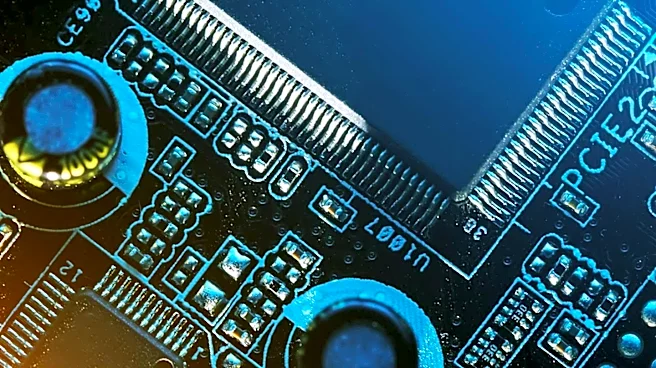
The European Commission has approved EUR659 million in state aid for four German semiconductor facilities, marking a significant step in the EU's chip strategy. This decision supports projects by companies such as Element 3-5, Vishay, KLA, and KETEK,
under the European Chips Act. The aid is intended to facilitate the development of semiconductor technologies without distorting competition, as per Article 107(3)(c) of the Treaty on the Functioning of the EU. The projects include high-performance wafer production, Power-MOSFET semiconductor switches for the automotive sector, advanced film-measurement equipment, and specialized chips for industrial sorting and recycling systems. The Commission's approval aims to strengthen the EU semiconductor value chain and foster cooperation with universities and research organizations.
Why It's Important?
This development is crucial as it highlights the EU's commitment to increasing its share of global semiconductor production, aiming to double it by 2030. The approval underscores the strategic importance of semiconductors in various sectors, including automotive and industrial systems. However, it also revives the debate over the uneven capacity of EU member states to fund such initiatives. Germany's fiscal ability to support large subsidies contrasts with smaller member states, potentially leading to a concentration of industrial sovereignty in wealthier countries. This situation poses a challenge to the EU's goal of strategic autonomy, as it may exacerbate existing economic disparities within the union.
What's Next?
The approval sets a precedent for future state aid decisions under the European Chips Act, potentially encouraging other member states to pursue similar projects. However, it also raises questions about the need for more equitable financing tools to ensure that semiconductor sovereignty benefits the entire EU, rather than just the wealthiest nations. The Commission will need to balance state-aid approvals with the risk of creating a geographically concentrated semiconductor industry. Policymakers may need to explore more collaborative funding mechanisms to support smaller economies in contributing to the EU's semiconductor goals.