






What's Happening?
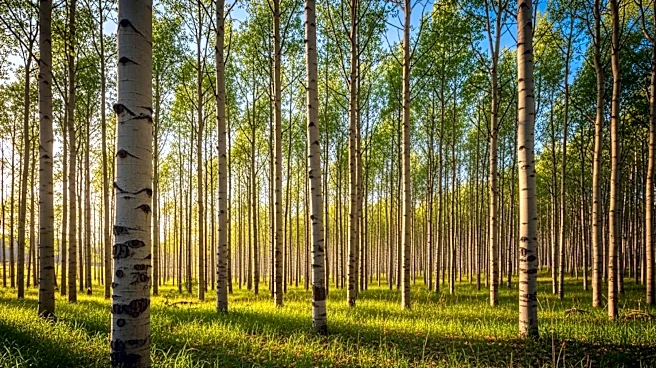
Pando, a massive clonal colony of quaking aspen located in Fishlake National Forest, Utah, is one of the largest and oldest living organisms on Earth. Spanning 106 acres, Pando consists of approximately 47,000 genetically identical stems, all connected
by a single root system. This unique organism, often referred to as a 'forest of one,' has been regenerating itself for thousands of years, potentially as long as 14,000 years, according to NASA Earth Observatory. Despite its resilience, Pando faces significant challenges from browsing animals like mule deer and cattle, which threaten the regeneration of new shoots. Ecologists have noted that while the root system remains healthy, the young shoots are often eaten before they can mature, jeopardizing the future of this ancient organism.
Why It's Important?
Pando's survival is crucial not only as a natural wonder but also as a symbol of ecological resilience and biodiversity. Its ability to regenerate over millennia highlights the importance of vegetative reproduction in sustaining ecosystems. However, the current threats from animal browsing underscore the delicate balance required to maintain such ecosystems. The decline in successful regeneration could lead to a loss of biodiversity and affect the broader ecological health of the region. Protecting Pando is vital for conservation efforts, as it serves as a living laboratory for understanding the impacts of climate change, animal behavior, and human intervention on natural habitats.
What's Next?
Efforts to protect Pando include fencing to prevent browsing and various forest management techniques like cutting and burning to stimulate growth. However, these measures have had mixed success. The future of Pando depends on effective management strategies that can balance the needs of wildlife with the preservation of this unique organism. Continued research and adaptive management practices will be essential to ensure that Pando can continue to thrive and serve as a vital part of the ecosystem. Stakeholders, including ecologists, conservationists, and local authorities, will need to collaborate to develop sustainable solutions that address the challenges facing Pando.
Beyond the Headlines
Pando's situation raises broader questions about the impact of human activity and climate change on ancient ecosystems. The pressures from browsing animals are exacerbated by changes in land use and climate, which can alter the availability of resources and the behavior of wildlife. Pando's struggle for survival is a microcosm of the larger environmental challenges facing many ecosystems worldwide. It highlights the need for comprehensive conservation strategies that consider both immediate threats and long-term ecological shifts. The story of Pando is a reminder of the interconnectedness of natural systems and the importance of preserving them for future generations.