




What's Happening?
The Democratic National Committee (DNC) on August 15, 2026, passed a resolution opposing federal bill H.R. 9724, known as the 'End Birthright Citizenship for Territories Act.' This legislation, introduced by Republican Congressman Morgan Griffith of Virginia
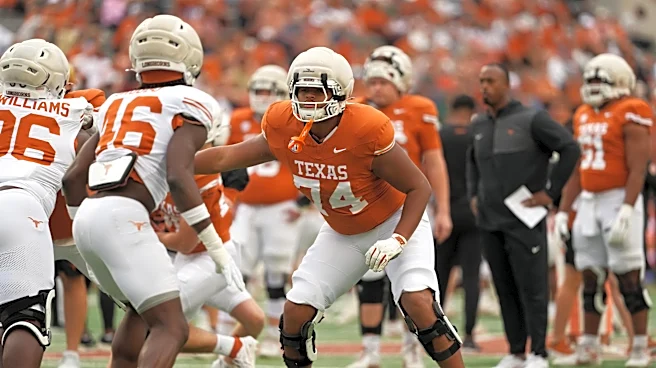
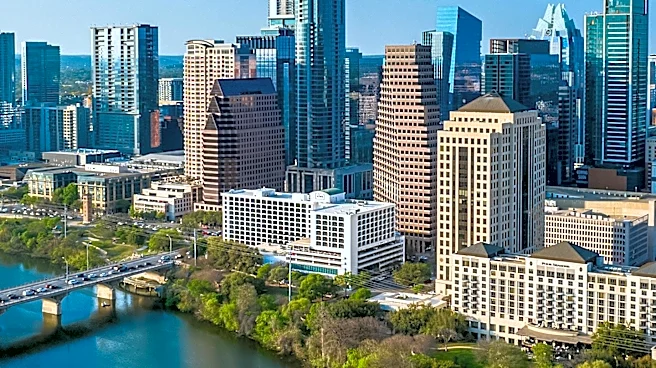
in July 2026, aims to restrict automatic U.S. citizenship for children born in Puerto Rico, Guam, the U.S. Virgin Islands, and other unincorporated territories if neither parent is a U.S. citizen or lawful permanent resident. The DNC's resolution was ratified during its Summer Meeting in Austin, Texas, following prior approval by the party’s Resolutions Committee. Luis Dávila Pernas, president of the Democratic Party of Puerto Rico and a DNC member, spearheaded the initiative with support from 62 Democratic co-sponsors. The DNC explicitly stated its opposition to any measure that would 'diminish, restrict, redefine, or call into question' the citizenship or constitutional rights of individuals born in U.S. territories.
Why It's Important?
This DNC rejection highlights a significant ideological divide regarding birthright citizenship and the political status of U.S. territories. The proposed legislation by Congressman Griffith challenges a long-standing interpretation of citizenship rights, potentially impacting thousands of individuals born in these territories. The DNC's stance underscores its commitment to protecting the rights of residents in U.S. territories, viewing such legislation as an attack on their fundamental rights. The debate also brings to the forefront the vulnerability of these rights under the current territorial system, emphasizing the need for a definitive resolution to Puerto Rico’s political status. For residents of these territories, the outcome of such legislative efforts directly affects their legal standing and access to federal protections and benefits, making this a critical issue for their future.
What's Next?
Following the DNC's rejection, the federal bill H.R. 9724, introduced by Congressman Griffith, will likely face continued strong opposition from Democratic lawmakers and advocacy groups. The DNC has also reaffirmed its support for the Puerto Rico Status Act, which proposes a federally binding self-determination process for Puerto Rican voters to choose between statehood, independence, or sovereign free association. While this act was approved by the U.S. House of Representatives in December 2022, it did not become law. The DNC's continued advocacy suggests that efforts to address the political status of Puerto Rico and protect birthright citizenship in territories will remain a key focus for the Democratic Party, potentially leading to renewed legislative pushes or continued political debate on these issues.
Beyond the Headlines
The controversy surrounding birthright citizenship in U.S. territories delves into deeper constitutional and ethical questions about equality and self-determination. The DNC's resolution argues that statehood is the only status option that would permanently guarantee equal constitutional rights and full political representation for residents of Puerto Rico. This debate exposes the inherent complexities and potential inequities of the current territorial system, where citizens may not have the same rights or representation as those in states. The 'risk of losing' citizenship, as articulated by Luis Dávila Pernas, underscores the precariousness of statutory citizenship compared to constitutional citizenship, raising fundamental questions about the long-term stability and security of rights for individuals in U.S. territories. This issue could fuel broader discussions about the future of U.S. territories and the definition of American citizenship.