






What's Happening?
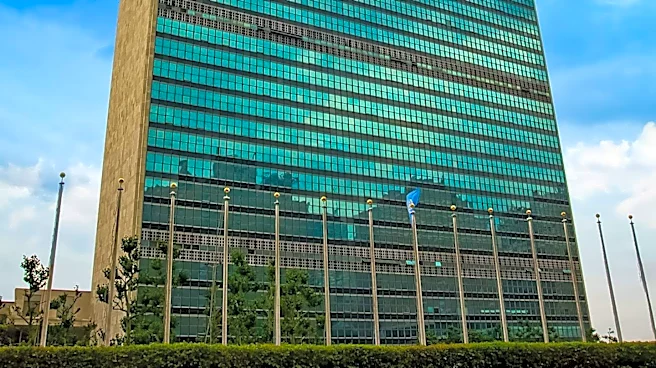
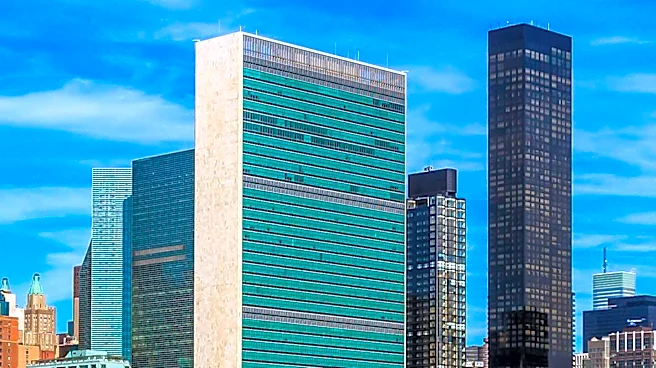
The United Nations (UN) was formally established on June 26, 1945, in San Francisco with the signing of the UN Charter. This international organization was created in the aftermath of World War II with the primary goal of maintaining international peace
and security and fostering cooperation among nations on economic, social, and humanitarian issues. The concept of the United Nations originated with President Franklin Delano Roosevelt in 1941, initially referring to the countries allied against the Axis Powers. The name was officially adopted on January 1, 1942, when 26 states signed the Declaration by the United Nations, committing to a joint war effort. The UN succeeded the League of Nations, which was formed after World War I but ultimately failed to prevent global conflict. The need for a new international body was first formally expressed in the Moscow Declaration of 1943 by China, Great Britain, the United States, and the USSR, leading to specific proposals drafted at the Dumbarton Oaks Conference in 1944 and further agreements at the Yalta Conference in February 1945. Representatives from 50 nations attended the founding conference in San Francisco to draft and sign the charter, which was ratified on October 24, 1945, now recognized as United Nations Day.
Why It's Important?
The establishment of the United Nations marked a pivotal moment in international relations, fundamentally reshaping global governance and the pursuit of peace. Its creation reflected a collective determination to prevent future global conflicts on the scale of the two World Wars, offering a structured platform for diplomacy and conflict resolution. The UN Charter outlined two main bodies: the General Assembly, comprising all member nations, and the Security Council. The Security Council, with its five permanent members (China, France, the United Kingdom, Russia, and the United States) holding veto power, is the principal organ responsible for ensuring peace, with its decisions binding on all member states. This structure provides a mechanism for addressing international crises, though the veto power of permanent members has often been a point of contention. Beyond peace and security, the UN's specialized agencies, such as the World Health Organization (WHO), UNICEF, UNESCO, and the World Bank, have played crucial roles in addressing global challenges like health, education, and poverty, significantly improving the lives of millions worldwide. The UN's continued existence and evolution underscore the ongoing global commitment to multilateralism and collective problem-solving.
What's Next?
The United Nations continues to adapt its peace operations and diplomatic efforts to address evolving global challenges, including new forms of conflict, humanitarian crises, and transnational threats. The organization's Department of Political and Peacebuilding Affairs leads initiatives in preventive diplomacy, mediation, and conflict prevention, supporting the Secretary-General's peace efforts and assisting Member States with electoral processes. As global dynamics shift, the UN faces ongoing pressure to reform its structures, particularly the Security Council, to better reflect contemporary geopolitical realities and ensure more equitable representation. Discussions about expanding permanent membership or modifying veto powers are recurring themes, aiming to enhance the UN's effectiveness and legitimacy in a multipolar world. The organization will also continue its vital work through its various agencies, tackling issues such as climate change, sustainable development, human rights, and global health, which require sustained international cooperation. The UN's role as a forum for dialogue and a coordinator of international action remains critical for navigating complex global issues and fostering a more stable and prosperous world.
Beyond the Headlines
The founding of the United Nations represents a profound shift in international legal and ethical frameworks, moving towards a system where collective security and human rights are paramount. The UN Charter, a foundational document, not only established an organizational structure but also enshrined principles of national sovereignty, non-intervention, and the peaceful resolution of disputes. This framework has profoundly influenced international law and the conduct of states, even if its ideals are not always perfectly realized. The UN's emphasis on multilateralism has fostered a culture of cooperation, encouraging nations to address shared problems through dialogue rather than unilateral action. However, the inherent power imbalances within the Security Council, particularly the veto power of the permanent members, highlight the tension between the ideal of collective security and the realities of great power politics. This tension often leads to debates about the UN's efficacy and its capacity to act decisively in certain conflicts. Furthermore, the UN's extensive network of specialized agencies has created a global infrastructure for addressing a vast array of human needs, from eradicating diseases to promoting cultural heritage, demonstrating the far-reaching impact of its humanitarian and developmental work. The UN's legacy is thus a complex tapestry of diplomatic achievements, humanitarian interventions, and ongoing challenges in its quest for a more peaceful and just world.