









What's Happening?
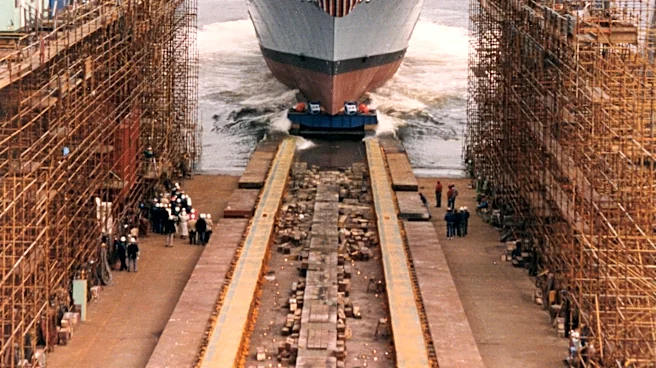
Indonesia's PT PAL has successfully launched the Philippine Navy's third strategic sealift vessel (SSV) on June 30, 2026, at its facilities in Surabaya. The vessel, expected to be commissioned as BRP Ilocos Norte, was constructed using PT PAL's Industrial
Maritime 4.0 framework, which integrates digital production processes to accelerate construction. Despite facing global geopolitical challenges that affected the supply chain and caused schedule adjustments, PT PAL managed to maintain optimal internal performance, minimizing the impact on project completion. The vessel is the first of two units ordered under a 2022 follow-on contract and retains the baseline configuration of earlier SSVs. It features a well deck for landing craft operations, a large flight deck for helicopter deployments, and internal capacity for troops, vehicles, and relief supplies.
Why It's Important?
The launch of the BRP Ilocos Norte is significant for the Philippine Navy as it enhances its operational capabilities in conducting amphibious operations, maritime security missions, and humanitarian assistance and disaster relief efforts. The vessel's advanced features, such as greater vehicle deck clearance and the ability to deploy the Philippine Navy's multi-purpose attack craft, represent a strategic upgrade in the Navy's fleet. This development is crucial for the Philippines, given its strategic location and the need to secure its maritime borders amid regional tensions. The successful launch also highlights PT PAL's resilience and adaptability in overcoming global supply chain challenges, setting a precedent for future naval construction projects.
What's Next?
Following the launch, the BRP Ilocos Norte will undergo further outfitting and sea trials before its official commissioning into the Philippine Navy. The completion of the second vessel under the 2022 contract is anticipated, which will further bolster the Navy's capabilities. The Philippine Navy is likely to continue its modernization efforts, focusing on enhancing its maritime security and disaster response capabilities. Stakeholders, including regional allies and defense partners, may closely monitor these developments, considering the strategic implications for regional security dynamics.