



What's Happening?
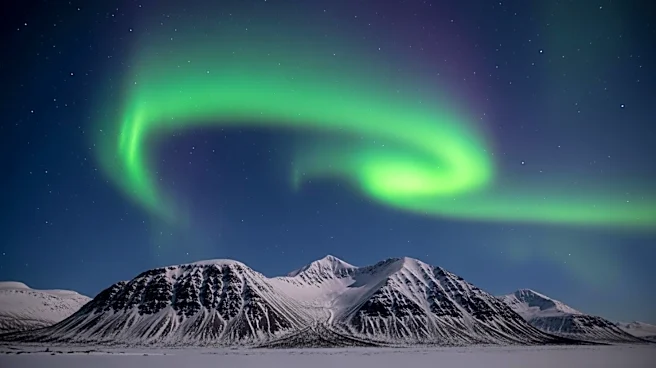
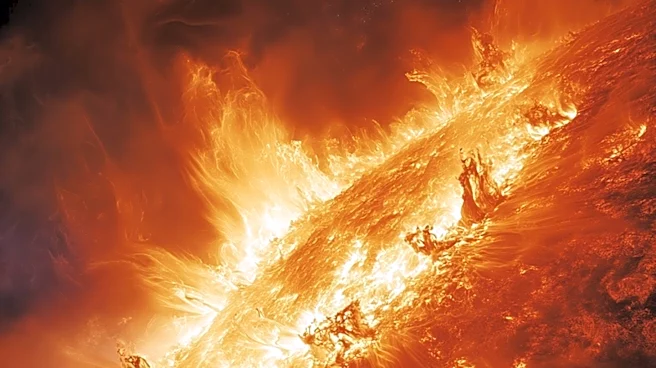
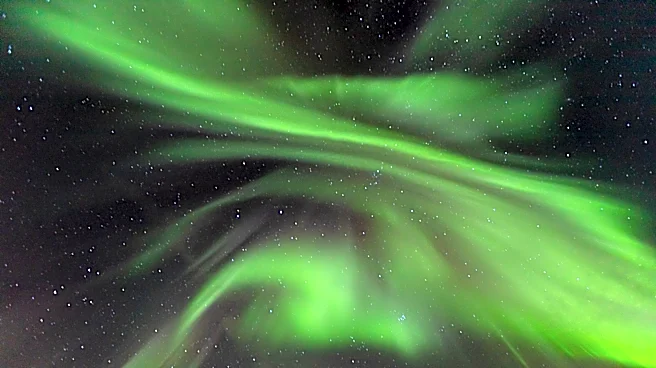
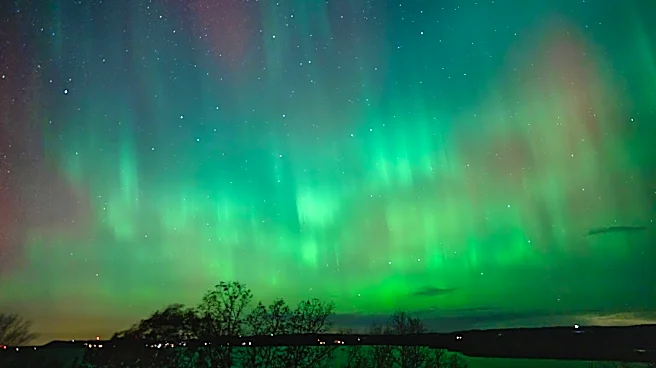
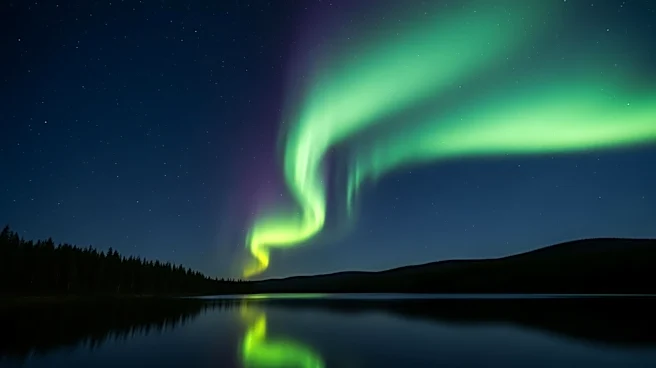
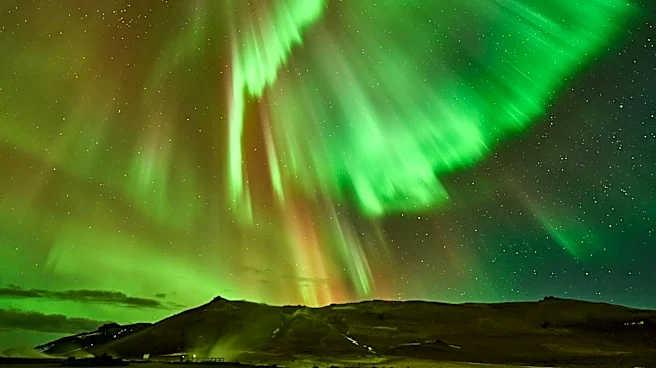
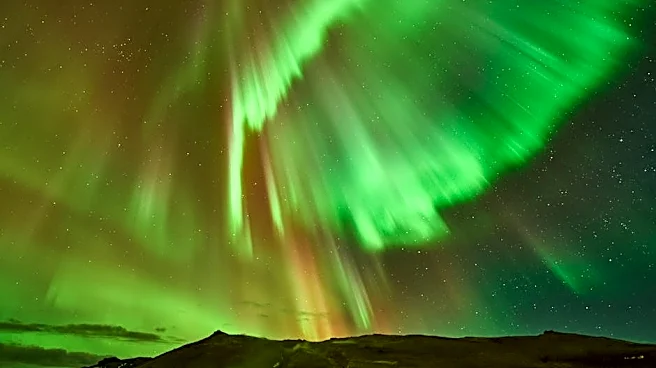
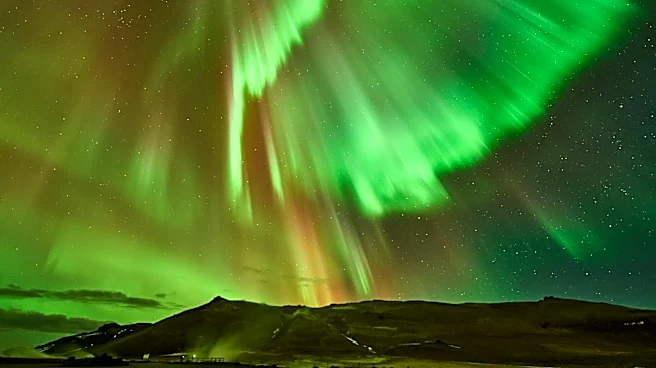
The Northern Lights, also known as the aurora borealis, are anticipated to be visible across several northern U.S. states on the nights of June 4 and June 5, 2026. This rare opportunity is driven by significant solar activity, including solar flares and coronal
mass ejections, which are expected to interact with Earth's magnetic field, potentially causing a strong geomagnetic storm. The best viewing times are between 10 p.m. and 2 a.m. local time, in dark areas away from city lights. States such as Washington, Oregon, Idaho, Montana, and others across the northern U.S. are likely to witness this natural phenomenon. However, the lights will not be visible as far south as Arizona.
Why It's Important?
The visibility of the Northern Lights in the U.S. is a rare event, typically limited to regions closer to the poles. This occurrence provides a unique opportunity for residents in the northern U.S. to experience a natural spectacle that is usually seen in more northern latitudes. The event highlights the impact of solar activity on Earth's atmosphere and offers educational opportunities about geomagnetic storms and their effects. It also has the potential to boost local tourism in areas where the lights are visible, as enthusiasts and photographers may travel to witness the event.
What's Next?
If the solar activity continues as predicted, the Northern Lights may be visible again in the near future, depending on the strength and frequency of solar flares. Observers are advised to monitor space weather forecasts for updates. Additionally, this event may prompt further scientific studies into the effects of solar activity on Earth's magnetic field and atmosphere.