




What's Happening?
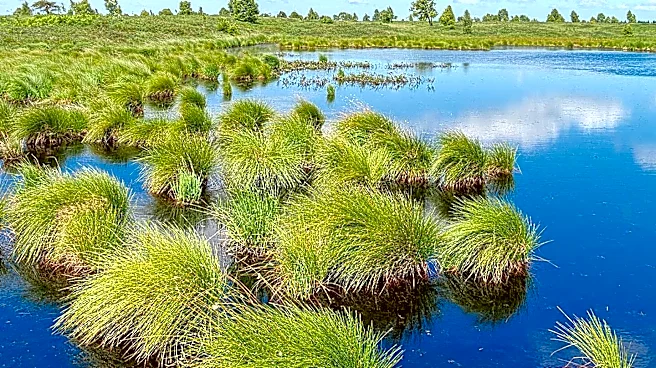
Maryland is actively engaged in marsh restoration efforts across the Chesapeake Bay, emphasizing natural, vegetated approaches to protect shorelines and enhance water quality. Coastal wetlands, including marshes, are crucial for sheltering wildlife, absorbing
tides and stormwater, and filtering pollutants. The state's Living Shoreline Protection Act of 2008 mandates nonstructural shoreline stabilization measures, such as marsh creation, over traditional methods like bulkheads, unless proven infeasible. A University of Maryland study on the Nanticoke River subestuary revealed tidal wetlands are losing elevation at a rate of 1.8 millimeters per year, falling short of the 5 millimeters per year needed to keep pace with global sea-level rise. Restoration projects are designed site-by-site, considering local conditions, and are part of a larger strategy that includes pollution reduction and habitat protection.
Why It's Important?
The health of Maryland's marshes is critical for the ecological and economic well-being of the Chesapeake Bay region. These wetlands provide essential habitats for fish and birds, contribute to water quality by filtering pollutants, and offer natural protection against flooding and erosion for waterfront communities. The emphasis on living shorelines reflects a shift towards sustainable environmental management, aiming to preserve natural ecosystems rather than relying on artificial structures. The measurable loss of marsh elevation highlights the urgent need for effective restoration strategies to combat the impacts of sea-level rise and climate change. Successful marsh restoration can mitigate property damage, support local fisheries, and maintain the aesthetic and recreational value of the Bay, benefiting both residents and the regional economy.
What's Next?
Maryland will continue to implement and fund marsh restoration projects, with ongoing efforts to secure grants and allocate resources for these initiatives. Property owners and communities are encouraged to engage with proposed shoreline and restoration projects, as their participation is vital for success. The state will also focus on broader efforts to reduce pollution from various sources, including runoff from developed land and agricultural areas, and to protect existing habitats. Research from institutions like the University of Maryland Center for Environmental Science will continue to inform restoration techniques and monitor the health of the Bay's wetlands. Long-term planning will also address the need for marshes to adapt to rising sea levels, potentially through inward migration where development allows.
Beyond the Headlines
The marsh restoration efforts in Maryland underscore a broader philosophical shift in environmental conservation, moving from reactive damage control to proactive ecosystem-based management. This approach recognizes the interconnectedness of natural systems and the long-term benefits of working with nature rather than against it. The challenges posed by sea-level rise and wetland degradation highlight the ethical responsibility to protect vulnerable ecosystems for future generations. Furthermore, the success of these initiatives relies heavily on public awareness and community involvement, fostering a sense of shared stewardship for the Chesapeake Bay. This model of integrated environmental management could serve as a blueprint for other coastal regions facing similar ecological threats.