



What's Happening?
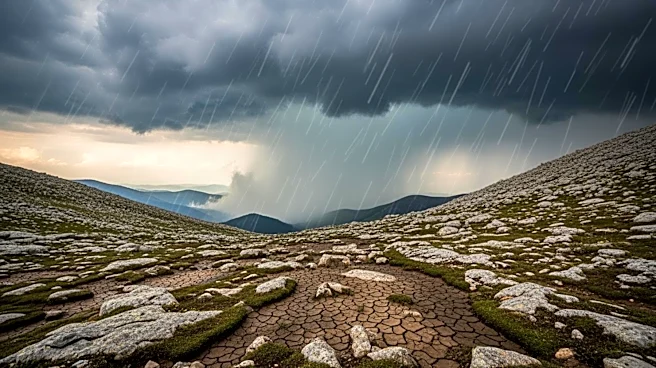
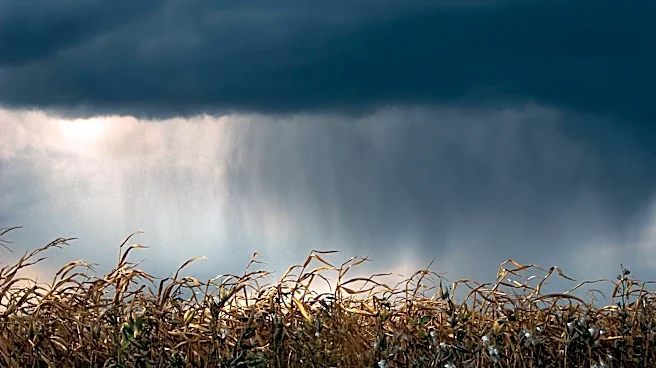
A study published in Nature reveals that the increasing concentration of rainfall into intense downpours, separated by longer dry periods, may reduce soil moisture in the Mountain West. Researchers found that heavy rainfalls result in more surface water,
which is prone to evaporation, rather than soaking into the ground. This pattern complicates water management in the region, which is already facing challenges like drought and wildfire risks. The study suggests that while intense storms may bring temporary relief, they do not provide the long-term moisture benefits of steady, moderate rainfall.
Why It's Important?
The findings have significant implications for water management and agricultural practices in the Mountain West. As climate change alters precipitation patterns, understanding these dynamics is crucial for developing strategies to ensure water availability and mitigate drought impacts. The study highlights the need for adaptive management approaches that consider both flood risks and long-term water storage. This research also underscores the broader challenges of climate change, as regions must navigate increasingly variable weather patterns and their effects on ecosystems and human activities.
Beyond the Headlines
The study raises questions about the future of water resource management in the face of climate change. It suggests a need for innovative solutions to capture and store water more effectively during intense rain events. Additionally, the findings may influence policy discussions on land use and conservation strategies to enhance soil moisture retention and reduce evaporation. The research also points to the importance of continued monitoring and modeling to anticipate and respond to changing environmental conditions.