






What's Happening?
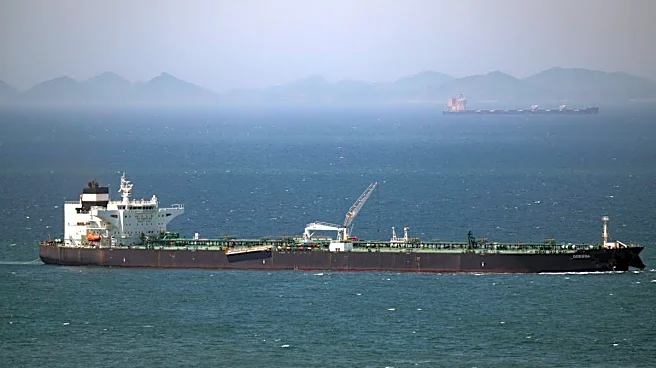
Exxon Mobil is experiencing unprecedented inventory levels due to the ongoing blockage of the Strait of Hormuz, a critical oil trade route, amid tensions between the U.S. and Iran. Negotiations are underway to reopen the strait, which is vital for global
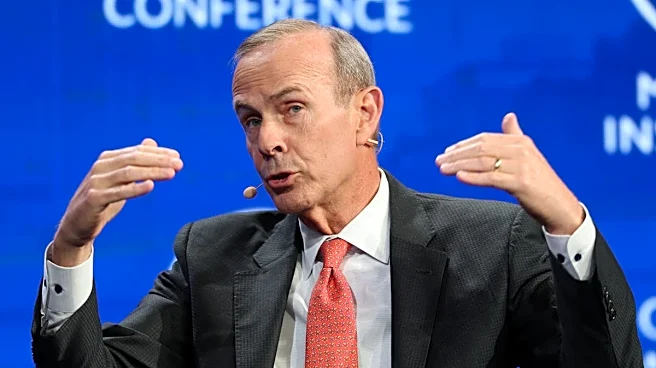
oil trade, as it handles one-fifth of the world's oil. Chevron CEO Mike Wirth highlighted the complexity of clearing the strait, which is currently filled with thousands of ships, and the need for assurance that the waters are free of mines. Crude oil prices have seen fluctuations based on the potential for a ceasefire and reopening of the strait, with Brent crude futures and gasoline prices showing recent declines. However, the situation remains volatile, with Exxon Mobil's senior vice president Neil Chapman warning of critically low inventory levels that could lead to price spikes if a resolution is not reached soon.
Why It's Important?
The blockage of the Strait of Hormuz has significant implications for global oil markets and energy security. As a major conduit for oil shipments, any disruption can lead to increased oil prices and economic instability. The situation underscores the geopolitical risks associated with energy supply chains and the potential for conflict to impact global markets. The U.S. and Iran's negotiations are crucial in determining the future of oil trade through the strait, with potential consequences for energy prices and economic stability worldwide. The outcome of these negotiations will affect not only oil companies like Exxon Mobil but also consumers and industries reliant on stable energy supplies.
What's Next?
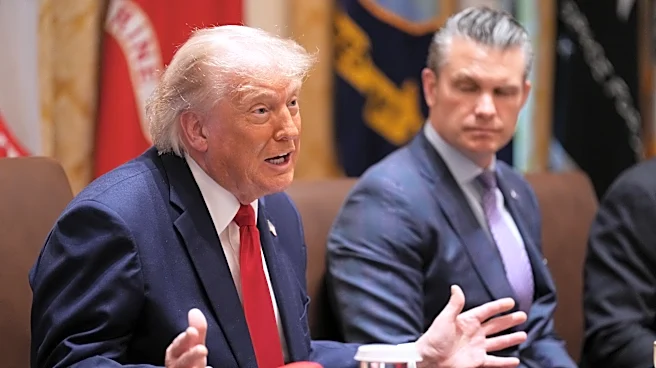
The resolution of the Strait of Hormuz blockage will depend on the outcome of ongoing negotiations between the U.S. and Iran. A memorandum of understanding could lead to the reopening of the strait, but the terms of such an agreement remain uncertain. The U.S. has emphasized the need for unrestricted shipping traffic, while Iran and Oman have discussed joint control of the strait, a scenario deemed unacceptable by the U.S. The situation remains fluid, with potential for further diplomatic developments or escalations that could impact global oil markets and geopolitical relations.