




What's Happening?
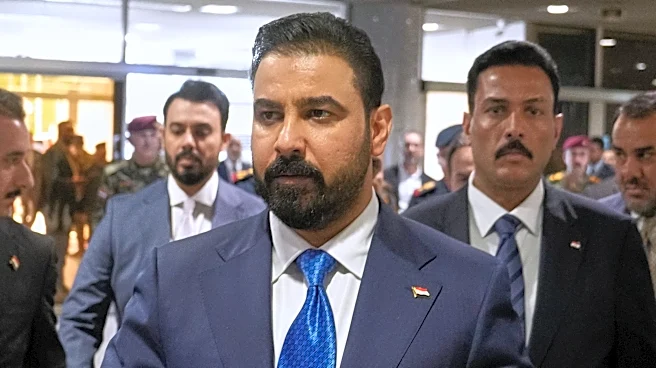
During a meeting in the Oval Office with Iraqi Prime Minister Ali al-Zaidi, President Donald Trump expressed his dissatisfaction with the current arrangement regarding the Strait of Hormuz. He stated that while no country should impose fees for passage
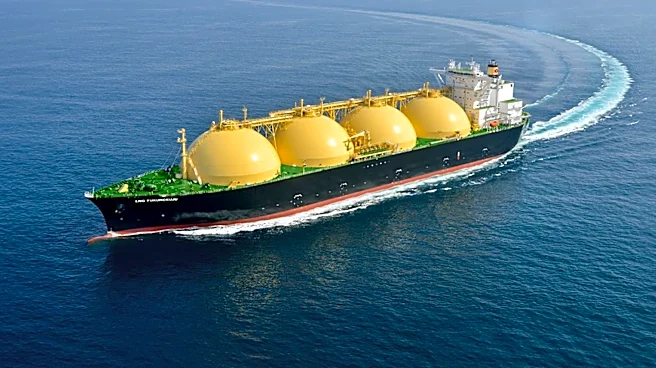
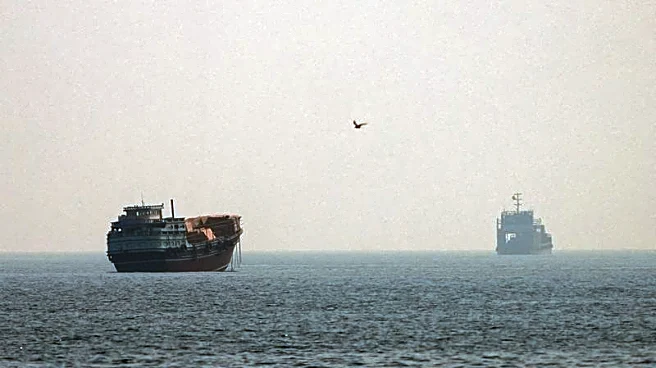
through the strait, it is unfair for the United States to bear the responsibility of protecting this crucial waterway without receiving compensation. The Strait of Hormuz is a vital maritime passage for global oil shipments, and its security is of international concern. President Trump's comments highlight his administration's stance on seeking a more equitable distribution of security responsibilities and costs associated with the strait.
Why It's Important?
The Strait of Hormuz is a strategic chokepoint through which a significant portion of the world's oil supply is transported. The U.S. military presence in the region has historically been a stabilizing factor, ensuring the free flow of oil and maintaining global economic stability. President Trump's remarks underscore a shift towards expecting other nations to share the financial burden of securing international waterways. This could lead to changes in international relations and defense policies, potentially affecting global oil markets and the geopolitical landscape. Countries reliant on oil shipments through the strait may need to reassess their security contributions or face increased costs.
What's Next?
Following President Trump's comments, there may be diplomatic discussions with allies and other stakeholders to negotiate a more balanced approach to securing the Strait of Hormuz. The U.S. could seek agreements that involve financial contributions or increased military participation from other nations. These negotiations could impact international alliances and defense strategies. Additionally, there may be responses from countries directly benefiting from the strait's security, potentially leading to new security arrangements or economic agreements.