




What's Happening?
NASA's Artemis II crew, consisting of astronauts Reid Wiseman, Victor Glover, Christina Koch, and Canadian Space Agency astronaut Jeremy Hansen, will hold a news conference at NASA's Johnson Space Center in Houston. The event is scheduled for April 16
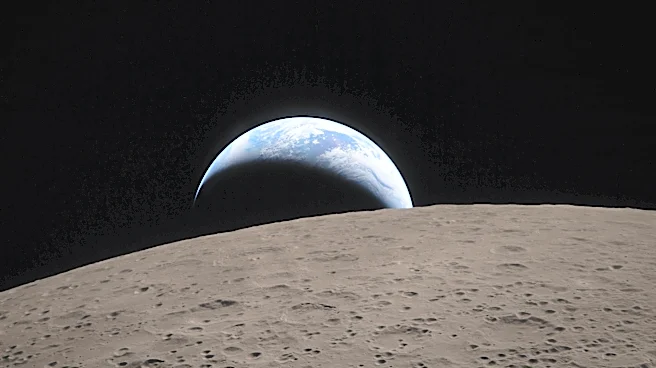
at 2:30 p.m. EDT, following their return to Earth on April 10. The crew completed a 10-day mission that included testing life support systems, manually piloting the Orion spacecraft, and conducting a lunar flyby with unprecedented views of the Moon's far side. They set a record for the farthest distance traveled by humans away from Earth. The news conference will be available for live viewing on NASA's YouTube channel, and media can attend in person or by phone, with prior RSVP required.
Why It's Important?
The Artemis II mission marks a significant milestone in NASA's efforts to establish a sustainable human presence on the Moon and eventually send astronauts to Mars. The successful completion of the mission's objectives demonstrates the capabilities of the Space Launch System and Orion spacecraft, paving the way for future lunar exploration. This mission is part of NASA's broader strategy to advance scientific discovery and economic benefits through space exploration. The involvement of international partners, such as the Canadian Space Agency, highlights the collaborative nature of modern space missions, which can foster global cooperation and innovation.
What's Next?
Following the news conference, the Artemis II crew will continue their postflight reconditioning and evaluations. NASA plans to send Artemis astronauts on increasingly challenging missions to explore more of the Moon, aiming to establish an enduring human presence on the lunar surface. These missions will lay the groundwork for future Mars exploration, with American astronauts expected to be among the first to set foot on the Red Planet. The success of Artemis II will inform the planning and execution of subsequent missions, contributing to the long-term goals of lunar and interplanetary exploration.