





What's Happening?
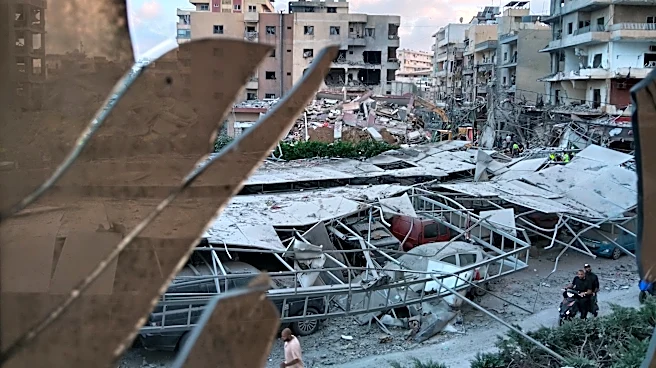
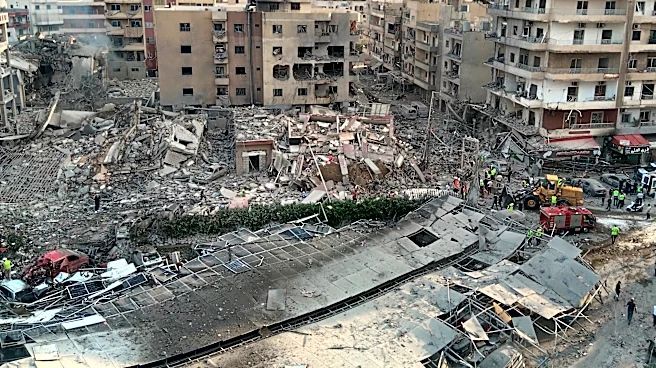
President Trump announced that he has successfully negotiated a halt to Israel's military offensive in Lebanon, following discussions with Israeli Prime Minister Benjamin Netanyahu and Hezbollah. Trump stated that Israeli troops would not advance into
Beirut and that both sides agreed to cease hostilities. Additionally, Trump indicated that negotiations with Iran are ongoing, despite recent tensions and Iran's threats to block the Strait of Hormuz. This development comes amid heightened regional tensions and concerns over potential escalation.
Why It's Important?
Trump's intervention in halting the Israeli offensive in Lebanon highlights the United States' influential role in Middle Eastern geopolitics. By preventing further military escalation, Trump aims to stabilize the region and maintain open channels for diplomatic negotiations with Iran. This move could have significant implications for U.S. foreign policy, as it seeks to balance its alliances with Israel and its strategic interests in the region. The situation also underscores the complexities of U.S.-Iran relations, as both countries navigate ongoing tensions and potential diplomatic resolutions.
What's Next?
The cessation of hostilities between Israel and Hezbollah may provide a temporary reprieve, but underlying tensions remain. The continuation of U.S.-Iran negotiations will be crucial in determining the future stability of the region. Stakeholders will be closely monitoring the situation to assess the potential for renewed conflict or diplomatic breakthroughs. The U.S. administration's handling of these developments could influence its foreign policy strategy and impact its relationships with key regional players.