
What's Happening?
Greek maritime risk management firm MARISKS has issued a warning about fraudulent messages being sent to shipping companies. These messages promise safe passage through the Strait of Hormuz in exchange
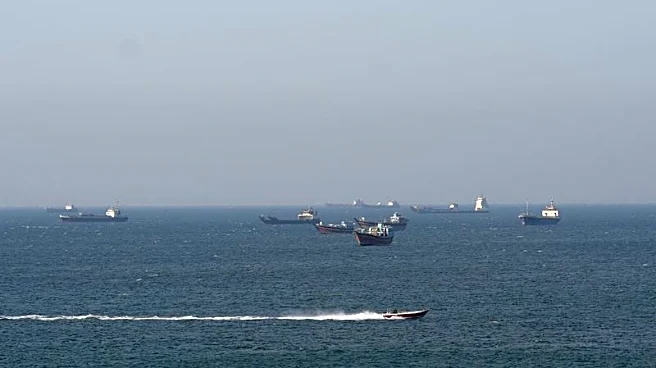
for cryptocurrency payments. The Strait of Hormuz is a critical chokepoint for global oil and liquefied natural gas transport, and its control has been a point of contention amid ongoing conflicts in the Middle East. The U.S. has maintained a blockade of Iranian ports, while Iran has intermittently imposed and lifted its blockade of the strait. The scam messages, falsely claiming to be from Iranian authorities, demand transit fees in Bitcoin or Tether for vessel clearance. MARISKS has clarified that these messages are not from legitimate Iranian sources. The situation has left hundreds of ships and approximately 20,000 seafarers stranded in the Gulf. Recent incidents include Iranian boats firing at vessels attempting to pass through the strait, further complicating the situation.
Why It's Important?
The fraudulent messages pose a significant risk to the shipping industry, which is already under strain due to geopolitical tensions in the region. The Strait of Hormuz is a vital artery for the global energy supply, and disruptions can have far-reaching economic impacts. The scam not only threatens the financial security of shipping companies but also endangers the safety of seafarers. The situation underscores the vulnerabilities in maritime security and the potential for exploitation by malicious actors. The ongoing conflict and blockades exacerbate these risks, highlighting the need for robust international cooperation and security measures to ensure safe passage for vessels. The economic implications are significant, as any prolonged disruption in the strait could lead to increased energy prices and supply chain challenges worldwide.
What's Next?
The international community, including maritime authorities and governments, may need to increase surveillance and security measures in the Strait of Hormuz to prevent further incidents and scams. Diplomatic efforts could be intensified to negotiate safe passage agreements and reduce tensions in the region. Shipping companies are likely to seek guidance and support from international maritime organizations to navigate the complex security landscape. Additionally, there may be calls for enhanced cybersecurity measures to protect against fraudulent communications targeting the shipping industry. The situation remains fluid, and stakeholders will need to remain vigilant to adapt to the evolving threats and geopolitical dynamics.