







What's Happening?
The U.S. Nuclear Regulatory Commission (NRC) has granted a construction permit to the Tennessee Valley Authority (TVA) for the nation's first commercial small modular reactor (SMR). This SMR, a 300-megawatt GE Vernova Hitachi boiling-water reactor, is slated
for construction at TVA's Clinch River site in Roane County, Tennessee. The approval follows a 14-month review process by the NRC. Boiling-water reactors operate by using heat generated from nuclear fission to boil water within the reactor vessel, which then produces steam to power a turbine for electricity generation. This project aims to address the increasing regional demand for power. While the permit has been issued, TVA has not yet announced a construction start date, indicating ongoing negotiations with industry partners regarding cost sharing and financial accountability.
Why It's Important?
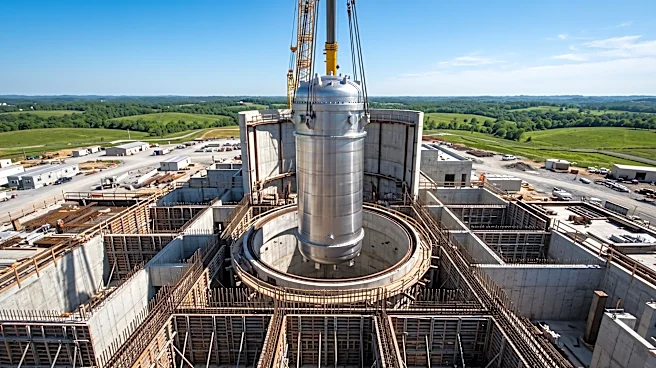
This approval marks a significant milestone in the development and deployment of advanced nuclear energy technology in the United States. The TVA is the first U.S. utility to receive a permit for the BWRX-300 design, making this project a pioneering effort. Small modular reactors, designed to produce up to 300 megawatts of electricity, offer several advantages over traditional nuclear units, which typically have three times the output. Their modular design allows major components to be factory-built and then shipped to the site, potentially leading to reduced construction times, lower costs, and decreased complexity. This approach could make nuclear power more accessible and economically viable, contributing to a more diversified and resilient energy grid. The project's location near Oak Ridge National Laboratory, a hub for nuclear research, further underscores its strategic importance in advancing nuclear energy capabilities.
What's Next?
Although the construction permit has been secured, immediate construction will not commence. The Tennessee Valley Authority (TVA) has not yet set a construction date. The utility is currently engaged in discussions with industry partners to finalize agreements on responsible cost sharing and financial accountability for both the design and construction phases of the project. The successful negotiation of these partnerships will be crucial for the project's progression. Once these agreements are in place, TVA will likely announce a timeline for the start of construction. The development of this SMR could also pave the way for other utilities to pursue similar projects, potentially accelerating the adoption of advanced nuclear technology across the U.S. as a means to meet growing energy demands and achieve decarbonization goals.
Beyond the Headlines
The approval of this small modular reactor (SMR) construction permit extends beyond immediate energy production, signaling a broader shift in U.S. energy policy and technological innovation. SMRs represent a paradigm shift in nuclear power generation, offering enhanced safety features, smaller land and water footprints, and the potential for more flexible deployment compared to conventional large-scale reactors. This development could foster a new domestic supply chain for nuclear components, creating jobs and stimulating economic growth in the manufacturing sector. Furthermore, the successful implementation of this project could bolster U.S. leadership in nuclear technology on the global stage, influencing international energy strategies and promoting the export of American SMR designs. It also highlights a renewed commitment to nuclear energy as a critical component of a clean energy future, addressing concerns about climate change and energy security.