
What's Happening?
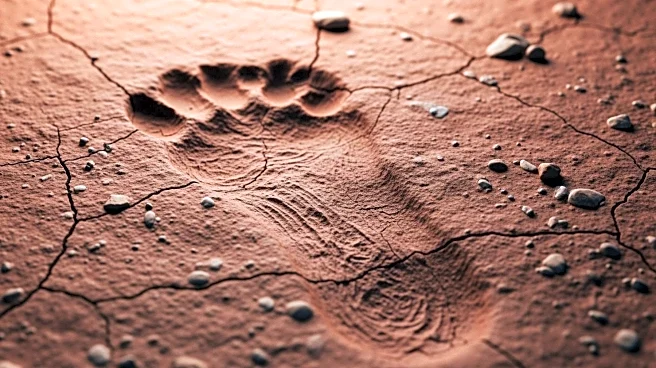
A fossilized human footprint discovered in southern Chile has been dated to 15,600 years ago, making it the oldest known footprint in the Americas. This discovery, made in the city of Osorno, suggests
that humans may have reached South America over 1,000 years earlier than previously believed. The footprint was first found in 2010, but it took nearly a decade of analysis by researchers from Universidad Austral de Chile, led by Karen Moreno, to confirm its age. The findings, published in PLOS One, challenge the previous scientific consensus that human presence in South America began after the last Ice Age, with the Monte Verde site in Chile, dated to about 14,600 years ago, being the earliest known habitation site. The footprint predates Monte Verde and is the first direct physical evidence of human activity in South America older than 12,000 years.
Why It's Important?
This discovery has significant implications for our understanding of early human migration patterns. It suggests that humans may have arrived in South America much earlier than previously thought, potentially altering the timeline of human settlement in the Americas. The footprint's age, determined through analysis of the sediment layer containing seeds, wood fragments, and a mastodon skull, provides a new perspective on the movement of ancient peoples across continents. This could lead to a reevaluation of migration theories and the routes taken by early humans. The presence of stone flakes and animal bones at the site also indicates that the area may have been a hunting ground, providing insights into the lifestyle and activities of these early inhabitants.
What's Next?
Further research and exploration of the site and surrounding areas could uncover additional evidence of early human activity, potentially leading to more discoveries that could reshape our understanding of prehistoric human migration. Scientists may focus on finding more artifacts or footprints that could provide additional context and support for the early arrival theory. This discovery may also prompt a reexamination of other archaeological sites in South America and beyond, as researchers seek to piece together a more comprehensive picture of human history in the region.