

What's Happening?
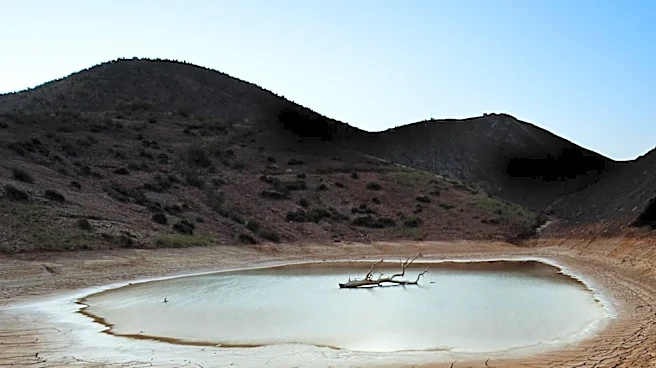
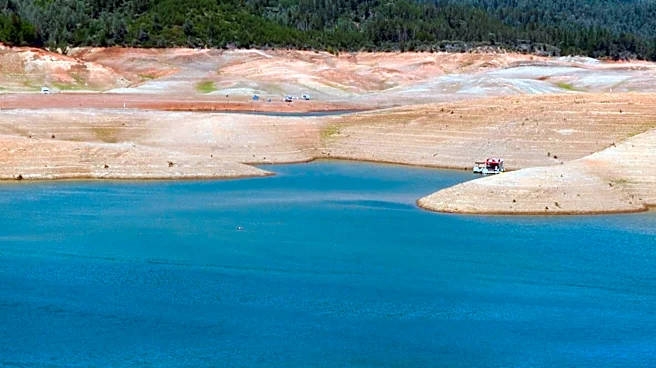
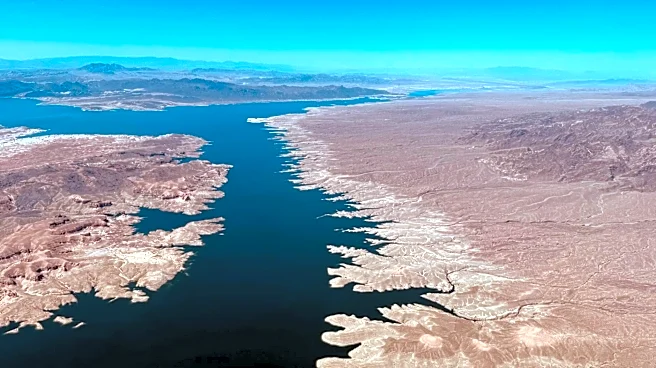
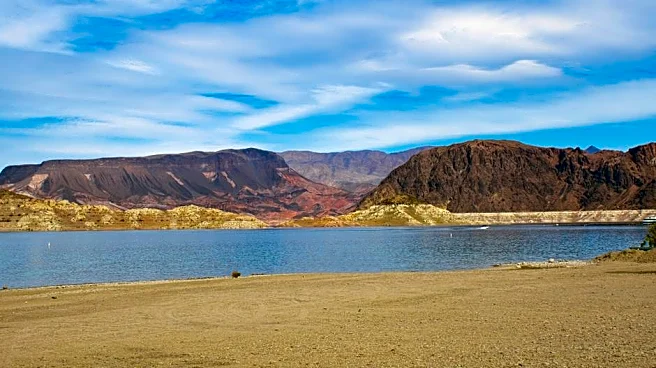
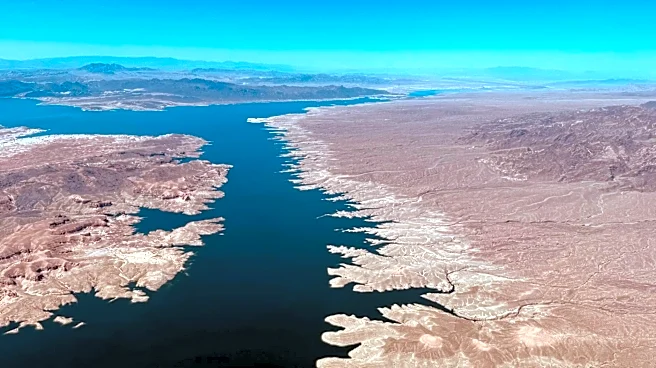
Lake Mead, the largest reservoir in the United States, has reached its lowest water level on record, highlighting the escalating crisis of the Colorado River system. As of Thursday, the water level dropped to 1,040.5 feet, surpassing the previous low set
in July 2022. This decline is part of a long-term trend exacerbated by climate change and over-allocation of the river's resources. The reservoir, crucial for supplying water to over 20 million people and supporting agriculture and power generation, is now at a critical point. The U.S. Bureau of Reclamation and the Department of the Interior are working to mitigate the risks by implementing a framework that allows for flexible responses to changing hydrologic conditions. However, experts warn that the current measures may not suffice to address the deepening water crisis.
Why It's Important?
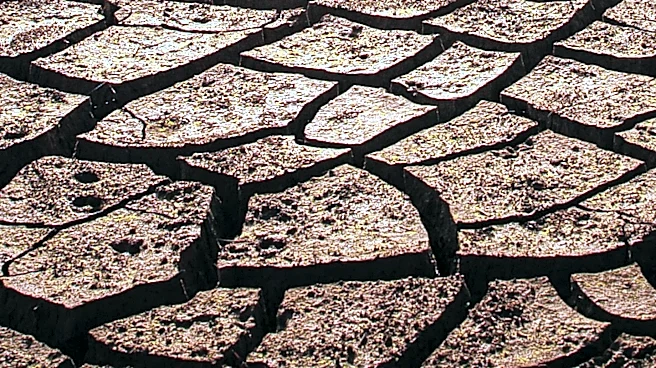
The record low water levels in Lake Mead underscore the severe challenges facing the Colorado River system, which is vital for the southwestern United States. The river supports millions of people, vast agricultural lands, and significant power generation. The ongoing drought and climate change have intensified the strain on this critical water source, threatening water security and economic stability in the region. The situation demands urgent and effective policy responses to ensure sustainable water management and to prevent further environmental and economic repercussions. The crisis also highlights the need for collaborative efforts among the states that rely on the river to develop long-term, consensus-based solutions.
What's Next?
The U.S. Bureau of Reclamation is expected to release two-year operating guidelines soon, detailing the water usage cuts required from the lower basin states through 2028. These cuts are anticipated to be around 20%, while no mandatory reductions are expected for the upper basin states. The ongoing negotiations among the seven states dependent on the Colorado River will be crucial in determining the future management of this vital resource. Stakeholders must work together to develop strategies that balance water conservation with the needs of the population and industries that depend on the river.