

What's Happening?
The House of Representatives has passed a $1.2 trillion spending package aimed at ending the partial government shutdown. The measure, which passed with a narrow vote of 217-214, now awaits President Trump's signature. The package funds the majority of the federal
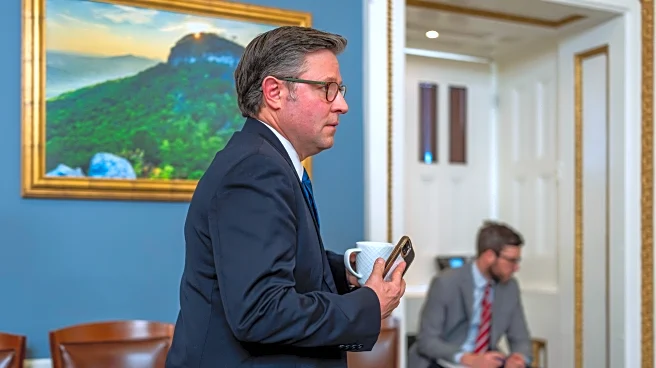
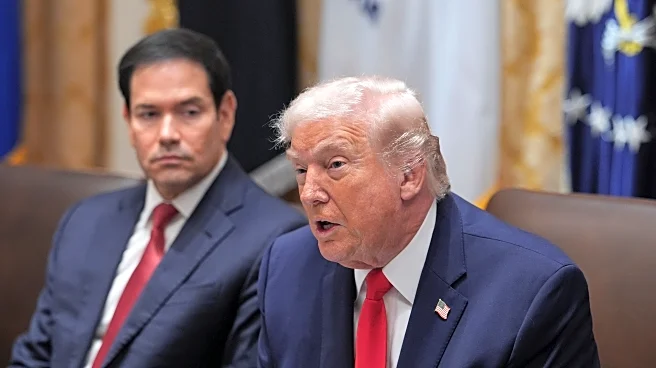
government through September 30, with a short-term funding extension for the Department of Homeland Security until February 13. This extension allows time for further negotiations on immigration enforcement policies. Speaker of the House Mike Johnson emphasized the need for consensus within the Republican conference to secure the necessary votes. President Trump has expressed his support for the bill, urging Republicans to remain united to avoid a prolonged shutdown.
Why It's Important?
The passage of this spending package is crucial in preventing further disruptions caused by the government shutdown, which began on Saturday. The shutdown affects various federal operations and services, impacting government employees and the public. By securing funding for most federal agencies, the package aims to stabilize government functions and provide certainty to federal workers. The short-term extension for the Department of Homeland Security highlights ongoing debates over immigration policies, a contentious issue in U.S. politics. The resolution of this shutdown could influence future negotiations and legislative priorities, affecting both political parties and their constituents.
What's Next?
Once President Trump signs the bill, the government will resume full operations, alleviating the immediate impacts of the shutdown. However, the short-term funding for the Department of Homeland Security indicates that further negotiations are necessary. Lawmakers will need to address immigration enforcement policies, which remain a divisive issue. The outcome of these discussions could shape future immigration legislation and influence the political landscape. Stakeholders, including political leaders and advocacy groups, are likely to engage in these debates, seeking to influence policy decisions.