








What's Happening?
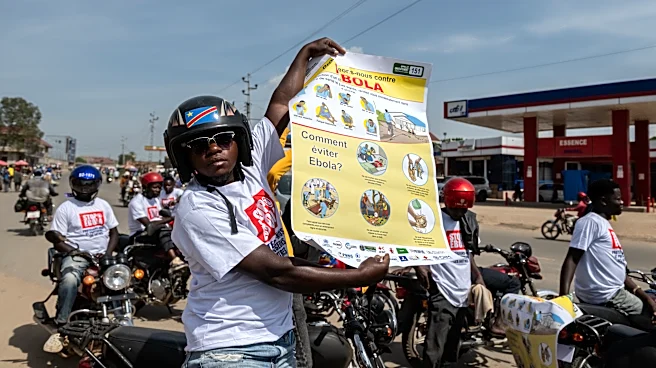
The United States has announced an additional $20 million in emergency funding to combat the Ebola outbreak in Africa, raising its total contribution to over $220 million. This funding, disclosed by the U.S. State Department, aims to bolster preparedness
and response operations in Burundi, Kenya, Rwanda, and South Sudan. The funds will enhance national emergency operations, improve disease surveillance, expand testing capabilities, and support infection prevention and control systems. The U.S. remains the largest single donor, having delivered approximately 150 tons of medical supplies to affected regions. The global support for the Ebola response is nearing $500 million, with significant contributions from the World Bank, European partners, and the United Nations. The outbreak, driven by the Bundibugyo strain, poses a significant challenge due to the lack of an approved vaccine or treatment.
Why It's Important?
The U.S. commitment to the Ebola response in Africa underscores the global health community's efforts to contain the outbreak and prevent its spread. The additional funding is crucial for strengthening health systems in affected countries, which are currently struggling with weak surveillance infrastructure and limited vaccine options. The U.S. aid not only supports immediate containment efforts but also highlights the importance of international collaboration in addressing public health emergencies. The outbreak's potential to spread across borders poses a significant risk, emphasizing the need for coordinated global action. The financial support from the U.S. and other international donors is vital for enhancing regional preparedness and response capabilities, ultimately aiming to protect both local and global populations from the virus.
What's Next?
As the U.S. and other international donors continue to provide financial support, the focus will likely shift towards improving coordination and accelerating diagnostic processes in the affected regions. The U.S. has also pledged $13.5 million to Kenya's Ebola preparedness efforts, which has sparked debate within the country regarding the role of African nations in managing outbreak risks. Moving forward, there may be increased discussions on how to balance international support with local capacity building. Health officials and public health experts will need to work closely to ensure that the financial commitments translate into effective on-the-ground actions, such as faster diagnostics and improved regional preparedness. The ongoing situation may also prompt further international dialogue on equitable health system strengthening and resource allocation.
Beyond the Headlines
The Ebola outbreak in Africa highlights broader ethical and logistical challenges in global health responses. The reliance on African health systems as the frontline defense against the virus raises questions about the equity of international health strategies. Critics argue that wealthier nations should not only provide financial support but also engage in capacity building to empower local health systems. This situation underscores the need for a more balanced approach to global health crises, where both financial aid and technical support are prioritized. The outbreak also serves as a reminder of the interconnectedness of global health, where diseases can quickly transcend borders, necessitating a unified and comprehensive response from the international community.