
What's Happening?
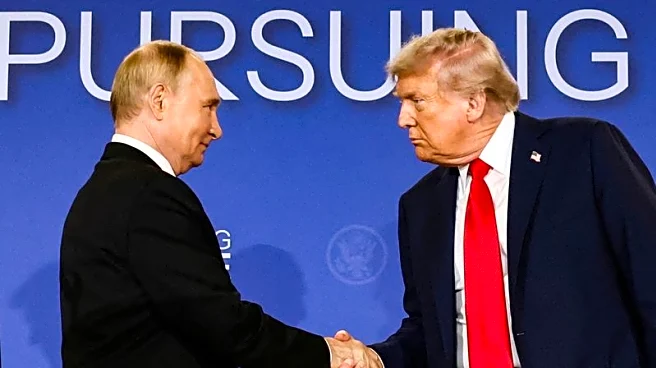
President Donald Trump has publicly denied claims by the Kremlin that Ukraine targeted Russian President Vladimir Putin's residence in a drone strike. This statement comes after initial concerns expressed
by Trump regarding the allegations. The Russian Foreign Minister, Sergey Lavrov, had accused Ukraine of launching drones at Putin's residence, which was reportedly thwarted by Russian defense systems. The accusation emerged shortly after Ukrainian President Volodymyr Zelenskyy met with Trump in Florida to discuss a 20-point peace plan aimed at ending the ongoing conflict in Ukraine. Trump, who initially appeared to take the Russian claims seriously, later expressed skepticism, stating that U.S. national security officials found no evidence of such an attack.
Why It's Important?
The denial by President Trump is significant as it reflects the ongoing complexities in U.S.-Russia-Ukraine relations. The situation underscores the challenges faced by the U.S. in mediating peace efforts in Ukraine, a conflict that Trump had promised to resolve swiftly. The Kremlin's allegations could be seen as an attempt to disrupt peace negotiations, highlighting the geopolitical tensions and the delicate balance of diplomacy involved. The U.S. administration's stance on this issue could influence international perceptions and the future of peace talks, potentially affecting U.S. foreign policy and its role in global conflict resolution.
What's Next?
The next steps involve continued diplomatic efforts to advance the peace plan discussed between Trump and Zelenskyy. The U.S. administration may need to address the Kremlin's claims more formally to prevent further escalation. Additionally, the international community will likely monitor the situation closely, with potential responses from European allies and other stakeholders in the conflict. The outcome of these negotiations could have lasting implications for regional stability and U.S.-Russia relations.