







What's Happening?
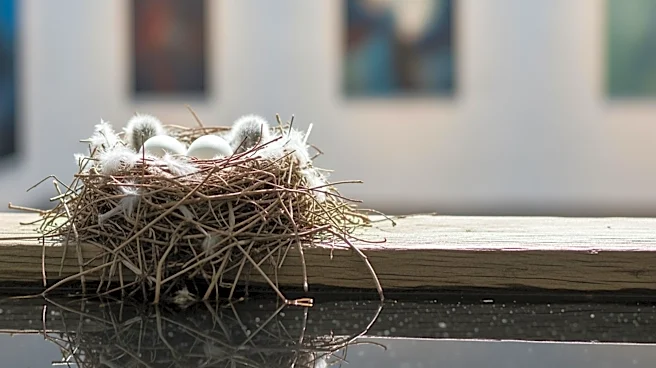
During the VIP preview of the Venice Biennale, a seagull has become an unexpected attraction by laying three eggs near the entrance of the Polish pavilion in the Giardini. The staff at the pavilion have constructed a protective barrier around the nest
to ensure the safety of the bird and its eggs, advising visitors to keep their distance from the protective mother. This natural occurrence has drawn significant attention from curators, critics, and collectors attending the event, with some considering it a highlight of the Biennale. The seagull's presence has momentarily shifted focus from the art exhibits to this unique display of nature.
Why It's Important?
The seagull's nesting at the Venice Biennale highlights the intersection of nature and art, drawing attention to the unexpected ways in which natural events can influence cultural experiences. This occurrence underscores the importance of environmental awareness and the need to respect wildlife even in highly curated spaces like art exhibitions. The attention garnered by the seagull also reflects a broader societal interest in nature and its role within human-centric environments. This event may encourage future art events to consider integrating natural elements more consciously, promoting a harmonious coexistence between art and the environment.
What's Next?
As the Venice Biennale continues, the seagull and its eggs are likely to remain a point of interest for visitors. The pavilion staff will need to ensure the ongoing safety of the nest, potentially adjusting visitor pathways to minimize disturbance. This situation may prompt discussions among event organizers about how to handle similar occurrences in the future, balancing the protection of wildlife with the needs of an international art exhibition. Additionally, the seagull's presence could inspire artists and curators to explore themes of nature and wildlife in their future works.