
What's Happening?
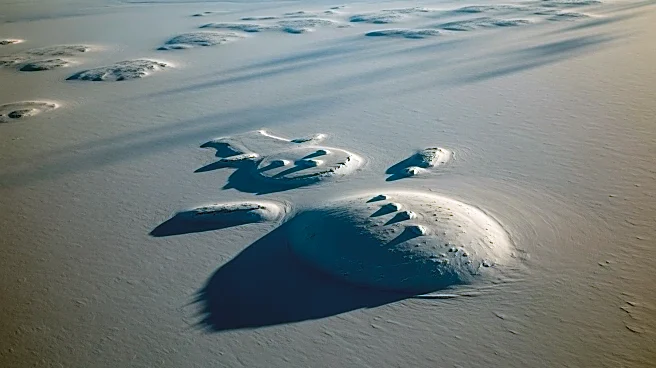
NASA's Landsat 8 satellite has captured a striking image of a 14-mile-long snowman-like formation in the Russian Arctic. This natural phenomenon, located near the village of Billings on the Chukchi Peninsula,
consists of a series of frozen lagoons shaped by thermokarst activity. This process involves the melting of buried ice wedges, causing the ground to collapse and form depressions that fill with meltwater. The image highlights the unique geological processes at play in this remote and largely inaccessible region.
Why It's Important?
The discovery of this snowman-like formation provides valuable insights into the effects of climate change on Arctic landscapes. As global temperatures rise, thermokarst activity is expected to increase, potentially altering the region's geography and ecosystems. This phenomenon also underscores the importance of satellite technology in monitoring remote areas, offering scientists a better understanding of environmental changes and their broader implications.