



What's Happening?
A U.S. intelligence assessment completed shortly before the United States and Israel launched a war in Iran determined that American military intervention was unlikely to lead to regime change in the Islamic Republic. The National Intelligence Council's
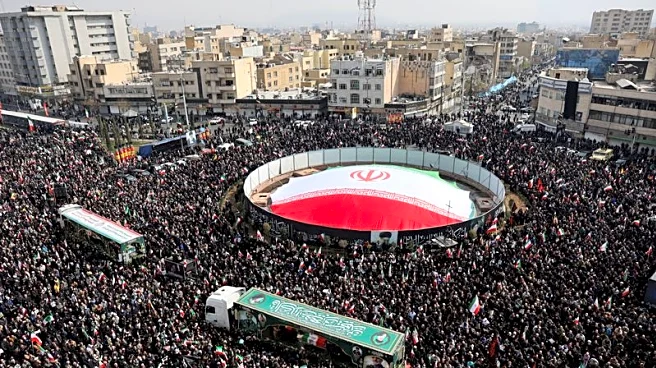
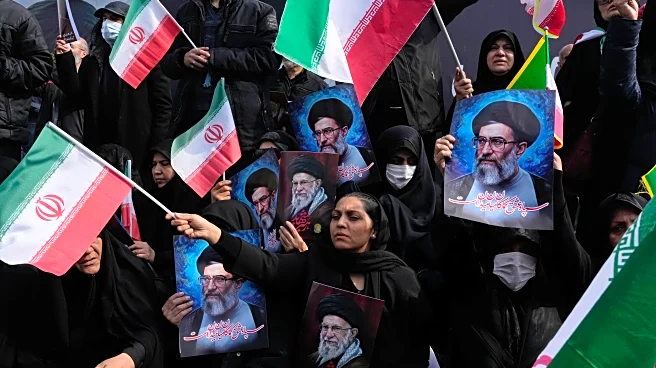
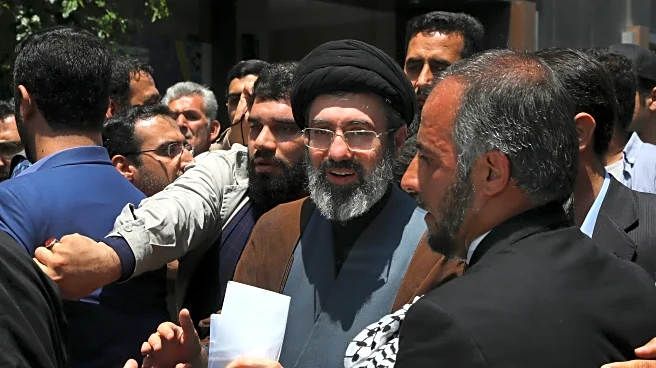
assessment concluded that neither limited airstrikes nor a prolonged military campaign would likely result in a new government taking over in Iran, even if the current leadership was killed. The assessment found that Iran's establishment would attempt to preserve continuity of power if Supreme Leader Ayatollah Ali Khamenei was killed. Following the assessment, Iran's leading clerics chose Mojtaba Khamenei, believed to hold more hardline views, as the new supreme leader, indicating resistance from Iran's leadership.
Why It's Important?
The intelligence assessment challenges the U.S. administration's assertions that its objectives in Iran could be completed quickly. The findings suggest that military intervention may not achieve the desired political outcomes, potentially leading to prolonged conflict and instability in the region. This has implications for U.S. foreign policy and military strategy, as well as for regional security dynamics. The selection of Mojtaba Khamenei as Iran's new supreme leader further complicates the situation, as his hardline views may lead to increased tensions and resistance to U.S. efforts. The assessment also highlights the complexities of regime change and the potential for unintended consequences in international interventions.
What's Next?
The U.S. administration may need to reassess its strategy in Iran, considering the intelligence assessment's findings. Diplomatic efforts and alternative approaches to addressing Iran's nuclear program and regional influence may become more prominent. The international community, including allies and regional stakeholders, will likely monitor the situation closely, as the potential for escalation remains. The administration's handling of the situation could impact U.S. relations with other countries and influence future foreign policy decisions.
Beyond the Headlines
The intelligence assessment raises questions about the effectiveness of military interventions in achieving political change. It underscores the importance of understanding the internal dynamics of a country and the potential for resistance from established power structures. The situation in Iran also highlights the broader challenges of addressing nuclear proliferation and regional conflicts through military means. The assessment may prompt discussions on the role of intelligence in shaping foreign policy and the need for comprehensive strategies that consider political, social, and cultural factors.