

What's Happening?
The ongoing conflict involving Iran has led to significant global economic repercussions, particularly due to the effective closure of the Strait of Hormuz, a critical oil transit route. This has resulted in a fuel crisis, with countries considering tapping
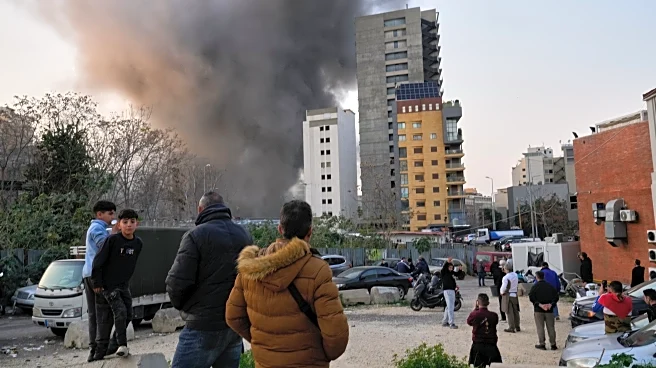
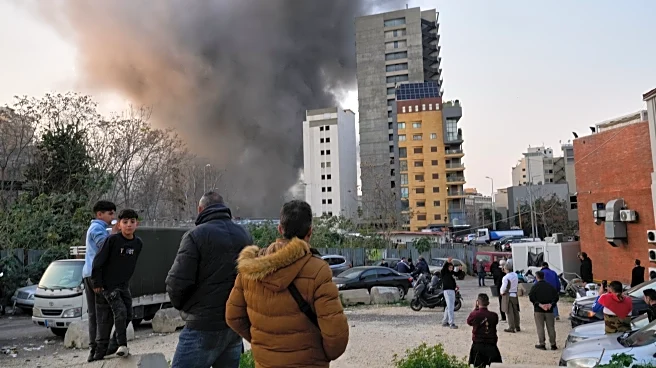
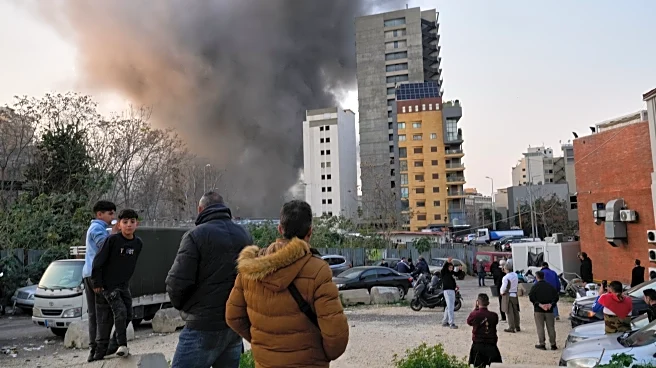
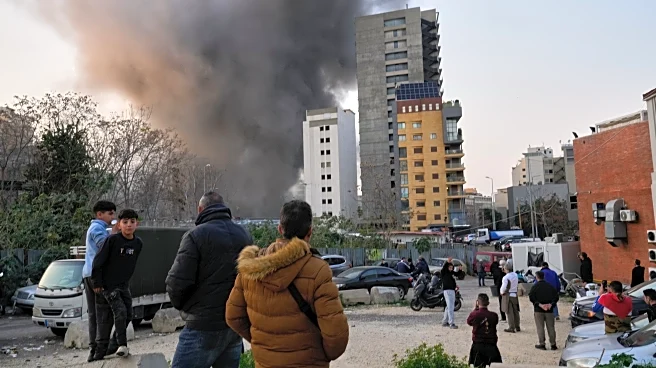
into oil reserves. The conflict has also disrupted the supply of helium, affecting semiconductor production and potentially increasing chip prices. Additionally, Israel has expanded military operations targeting Hezbollah in Lebanon, and mass evacuations are underway. The situation is further complicated by propaganda efforts within Iran, where citizens receive messages claiming victory in the conflict.
Why It's Important?
The closure of the Strait of Hormuz and the resulting fuel crisis have far-reaching implications for global economies, particularly those reliant on Middle Eastern oil. The disruption in helium supply could exacerbate existing challenges in the semiconductor industry, affecting technology sectors worldwide. The conflict's escalation also poses significant geopolitical risks, with potential impacts on international relations and regional stability. The economic fallout from rising oil prices and supply chain disruptions could lead to increased costs for consumers and businesses, highlighting the interconnectedness of global markets.
What's Next?
As the conflict continues, countries may need to implement strategic measures to mitigate the economic impact, such as increasing domestic energy production or seeking alternative supply routes. The international community may also engage in diplomatic efforts to de-escalate tensions and ensure the safe passage of oil through the Strait of Hormuz. Monitoring the situation closely will be crucial for governments and businesses to adapt to the evolving geopolitical landscape and its economic consequences.