


What's Happening?
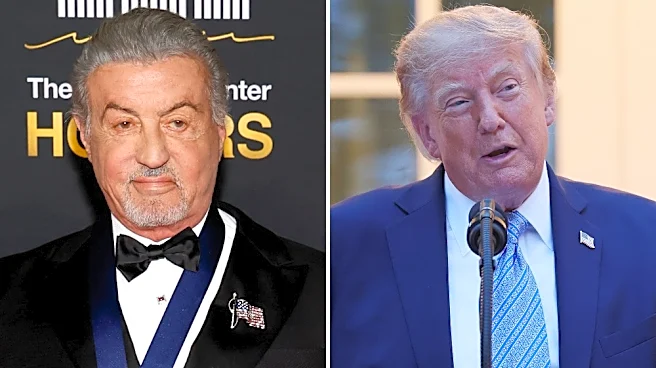
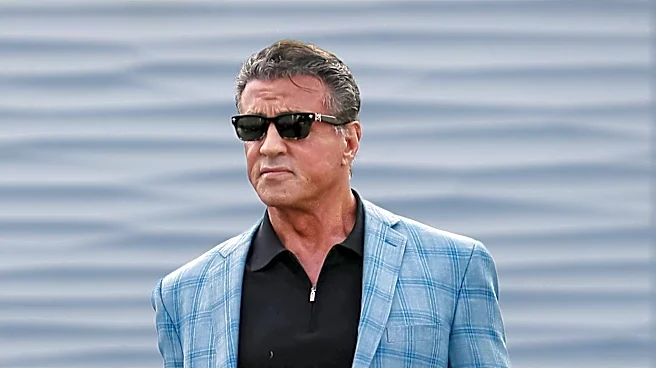
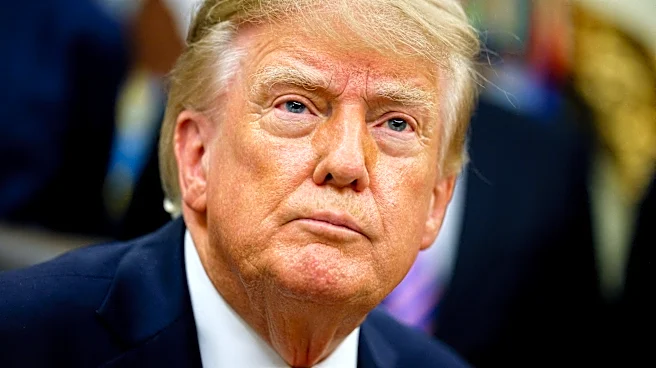
Sylvester Stallone has declined President Trump's appointment as a 'special ambassador' to Hollywood, an announcement made by President Trump in January 2025. Stallone revealed he learned about the appointment through television news, expressing surprise
and skepticism. He stated that he had already informed President Trump of his inability to take on the role. Stallone explained his hesitation, noting that Hollywood operates like 'feudal states' with established 'kingdoms' among the studios. He believes that outsiders, including himself, Mel Gibson, and Jon Voight (also named as ambassadors), would be ineffective in influencing the corporate structure of Hollywood. Stallone emphasized that the industry is corporate and would not be receptive to his financial advice. President Trump had announced the appointments on Truth Social, aiming to revitalize Hollywood, which he claimed had lost business to foreign countries.
Why It's Important?
This development highlights the complex relationship between political appointments and the entertainment industry, particularly in a politically charged environment. President Trump's attempt to appoint 'special ambassadors' to Hollywood underscores a perceived need to influence or reform the industry from a political standpoint. Stallone's refusal, based on the inherent structure and corporate nature of Hollywood, suggests a significant disconnect between political aspirations and the practical realities of the film industry. It also reflects the challenges of imposing external influence on a well-established and self-governing sector. The situation could further polarize discussions around the role of politics in arts and culture, and the autonomy of creative industries. For Hollywood, it reinforces its independence from direct political intervention, while for political figures, it demonstrates the limitations of such appointments without prior consultation or understanding of industry dynamics.
What's Next?
Following Stallone's public declination, it remains to be seen how President Trump will respond to the rejection of his appointment. The status of the other named ambassadors, Mel Gibson and Jon Voight, and their potential acceptance or refusal of the roles, will likely come under scrutiny. This event could prompt further discussions within Hollywood regarding its relationship with political administrations and the extent to which it should engage with such appointments. It may also lead to a re-evaluation of how political figures approach engagement with the entertainment industry, potentially favoring more collaborative or less direct methods. The incident could also fuel broader public discourse on the separation of politics and entertainment, and the influence each sphere has on the other.
Beyond the Headlines
Stallone's candid remarks about Hollywood's 'feudal states' and 'kingdoms' offer a glimpse into the deeply entrenched power structures within the entertainment industry. His assertion that 'corporate people won’t want to hear me tell them about finance' points to the insular nature of Hollywood's business operations and its resistance to external advice, especially from those perceived as outsiders. This situation also touches upon the broader cultural implications of political figures attempting to 'fix' or 'revitalize' an industry that often sees itself as a distinct cultural entity. The incident could deepen the existing divide between certain political factions and the entertainment industry, potentially impacting future collaborations or policy discussions related to arts funding, media regulation, or cultural diplomacy. It also raises questions about the effectiveness of symbolic appointments without a clear mandate or understanding of the industry's operational realities.