



What's Happening?
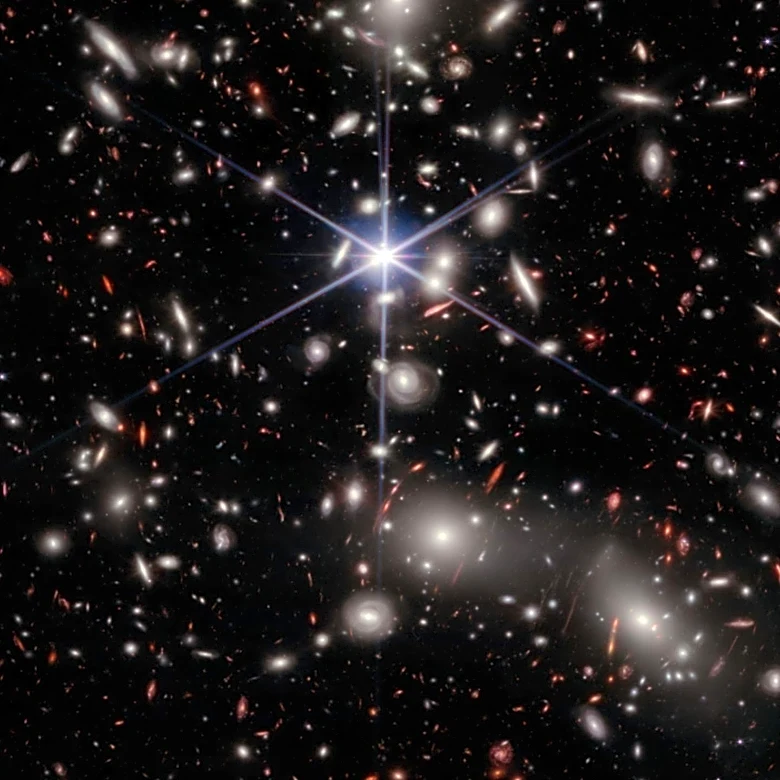
The Boötes Void, a massive region in space approximately 300 million light-years wide, has been a subject of interest since its discovery in 1981. Initially identified by astronomers Robert Kirshner and colleagues, the void contains far fewer galaxies
than expected, with only about 60 found instead of the anticipated 2,000. This discrepancy has led to questions about the nature of cosmic voids and their formation. Recent studies suggest that the Boötes Void may have formed from the merging of smaller voids, creating a large, sparsely populated region. The void's characteristics make it a valuable area for studying cosmic acceleration and dark energy.
Why It's Important?
The Boötes Void provides a unique opportunity to study the large-scale structure of the universe and the forces that shape it. Understanding voids like Boötes can offer insights into dark energy and the expansion of the universe, as these regions are primarily influenced by cosmic acceleration. The void's existence challenges traditional models of galaxy distribution and highlights the complexity of cosmic structures. Research on the Boötes Void could lead to advancements in cosmology, particularly in understanding the role of dark energy and gravity on a cosmic scale.
What's Next?
Future research will focus on further mapping and analyzing the Boötes Void to understand its formation and characteristics. Advanced telescopes and surveys will continue to explore the void's structure and the distribution of galaxies within it. Scientists aim to refine models of cosmic voids and their role in the universe's expansion. The Boötes Void will remain a key area of study for astronomers seeking to unravel the mysteries of dark energy and the universe's large-scale structure.